2 Day Great Wall of China Itinerary: Jinshanling, Gubeikou & Mutianyu
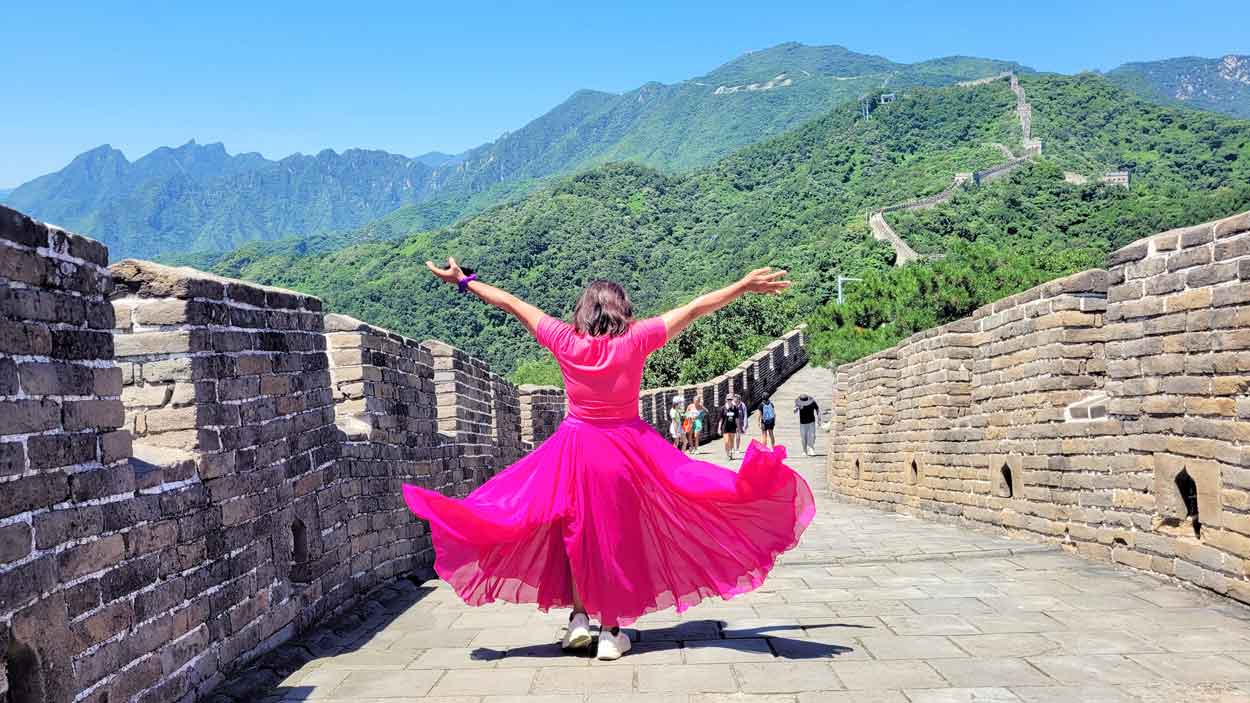
My daughter was six years old when she slept inside a Great Wall watchtower.
Our 2 day Great Wall of China itinerary included hiking Jinshanling, camping overnight inside a watchtower at Gubeikou, watching sunrise from the wall, and visiting Mutianyu the next morning.
We booked a tour company that handled transportation, camping gear, meals, and an English-speaking guide. We carried only a day pack.
Short version: Our 6-year-old handled the Jinshanling hike well, the overnight at Gubeikou was the highlight, and having a local company handle the logistics made the trip much easier.
What's In This Article?
Our 2-Day Great Wall Itinerary at a Glance
| When | Where | What We Did |
|---|---|---|
| Day 1 morning | Beijing → Jinshanling | Hotel pickup, drive to Jinshanling and lunch |
| Day 1 afternoon | Jinshanling | 3–4 hour Great Wall hike |
| Day 1 evening | Jinshanling → Gubeikou | Drive to Gubeikou, dinner and overnight inside a watchtower |
| Day 2 sunrise | Gubeikou | Watch sunrise from the Great Wall |
| Day 2 morning | Gubeikou → Mutianyu | Drive to Mutianyu, chairlift and Great Wall visit |
| Day 2 afternoon | Mutianyu → Beijing | Lunch and return to Beijing |
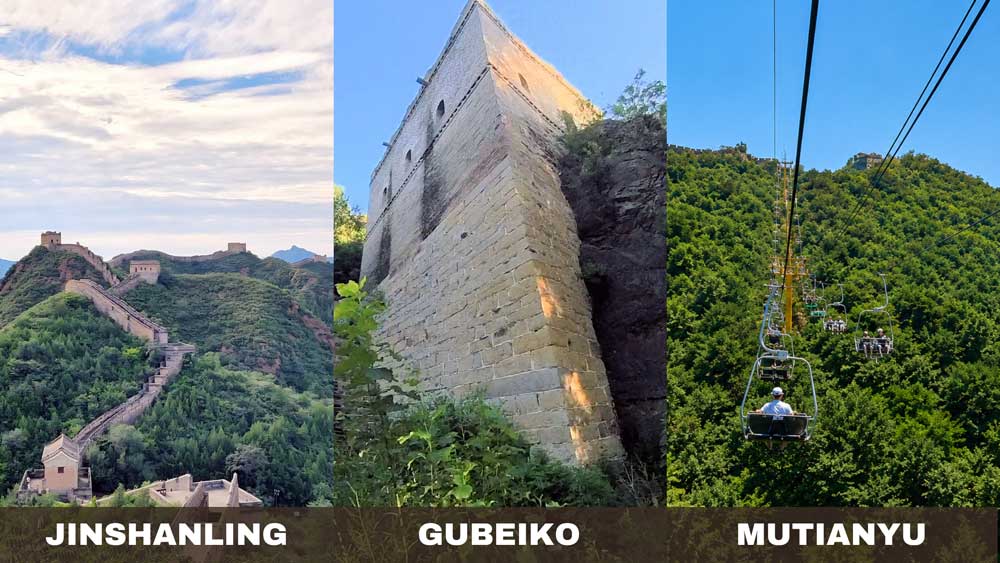
Important: Jinshanling, Gubeikou and Mutianyu were separate stops. We used road transportation between them.
How Much Our 2-Day Great Wall Trip Cost
We paid ¥4,800 + US$100 for our group (about US$772 total at the time).
That included:
- Private transportation for both days
- English-speaking guide
- Local driver
- Tent and sleeping bags
- Great Wall entrance tickets
- Lunch and dinner on Day 1
- Breakfast and lunch on Day 2
We didn’t pay for any additional tour services during the trip.
For us, the biggest value was having someone coordinate three Great Wall sections, transportation, meals and the overnight setup—especially with a 6-year-old.
Prices and inclusions change. This is what we paid for our trip, not a current quoted price.
How We Booked Our Great Wall Trip
We booked through a local tour company that handled the entire two days.
A driver picked us up from our Beijing hotel and stayed with us for the trip. Our English-speaking guide joined us for the hike, while a local driver helped with the camping setup and meals.
For us, this was much easier than trying to arrange an overnight independently.
Can You Camp on the Great Wall?
It depends on the section. Camping isn’t permitted in many restored tourist areas, and access rules can change.
Our overnight at Gubeikou was arranged by a local tour company familiar with the area. Confirm the current rules and exact camping location before booking.
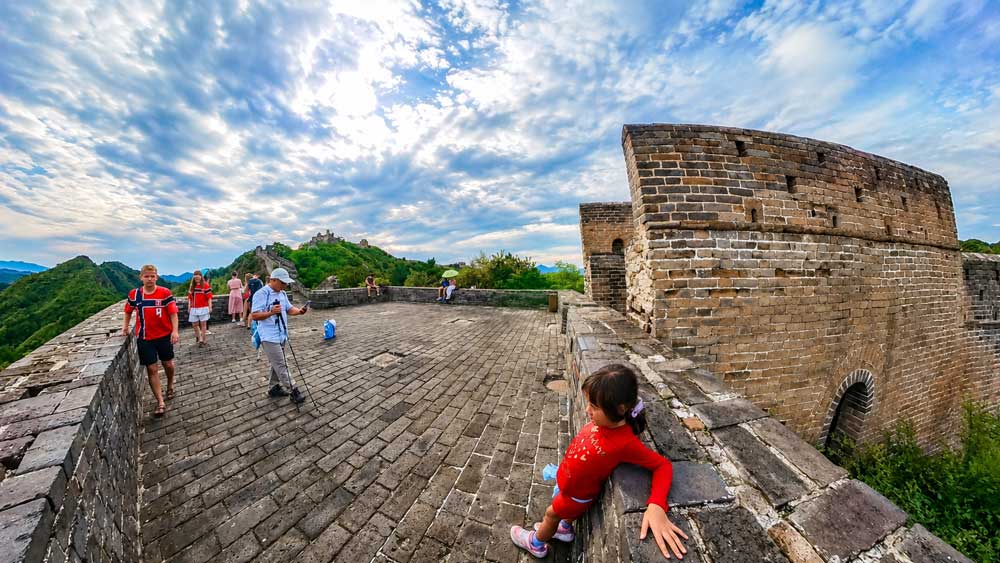
Day 1: Hiking Jinshanling
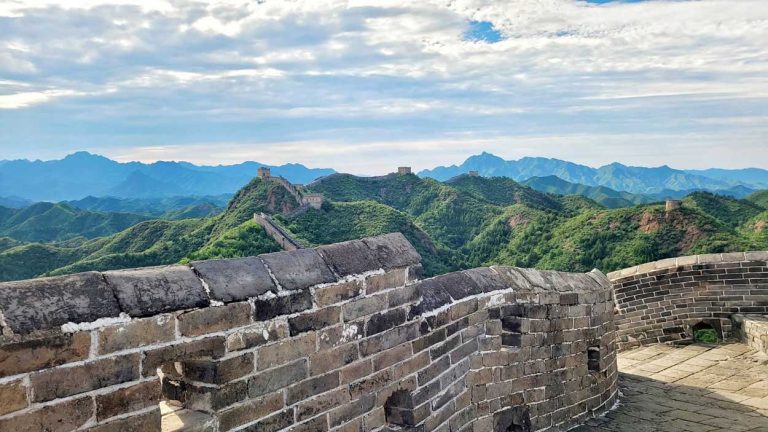
Jinshanling was the main hiking portion of our trip and, if I had to choose between Jinshanling and Mutianyu purely for scenery and hiking, I’d choose Jinshanling.
It had mountain views, long ridgelines, watchtowers and far fewer people during our visit.
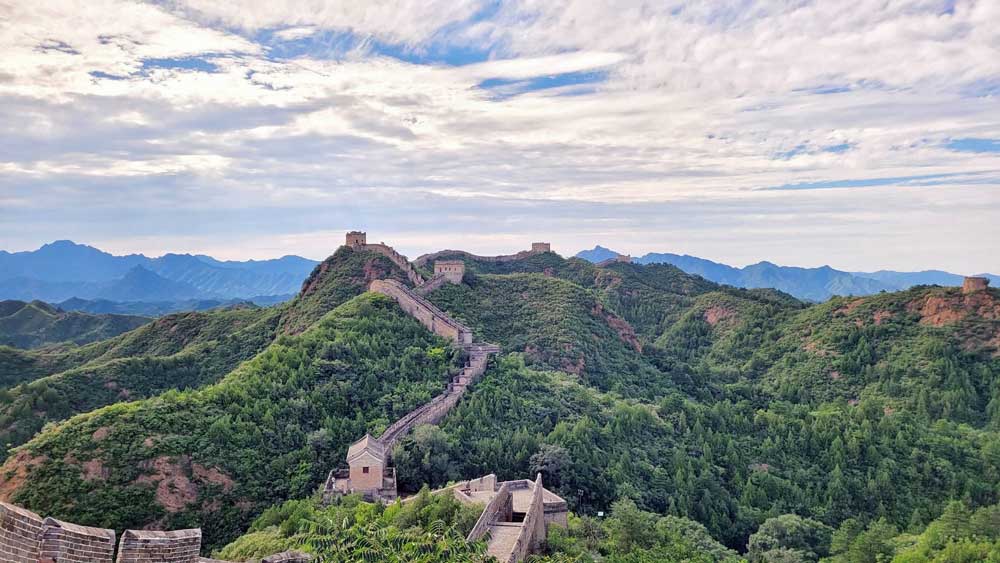
What Our Jinshanling Hike Was Like
We ate lunch at the base before starting our roughly 3–4 hour hike.
The wall climbs steeply, levels off, then climbs again. The stone is uneven in places and some sections have no handrails, but our route was manageable.
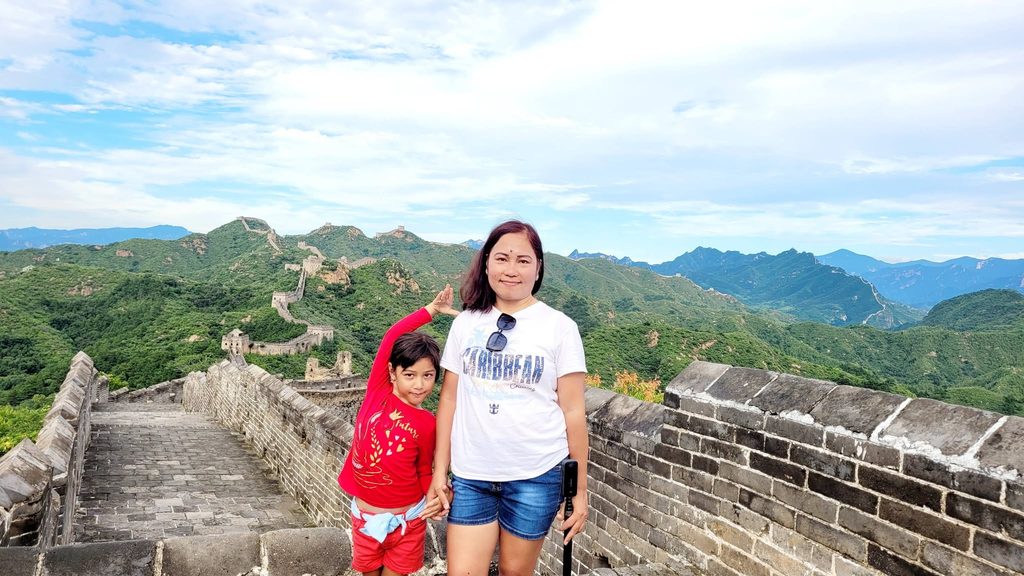
Our six-year-old handled it well. She ran ahead on flatter sections and reached for my hand when the steps became steeper.
Meanwhile, I was carrying the backpack with her camera, our Insta360 stick and snacks. At one point our guide quietly took it from me on a steep section and carried it until the ground leveled out.
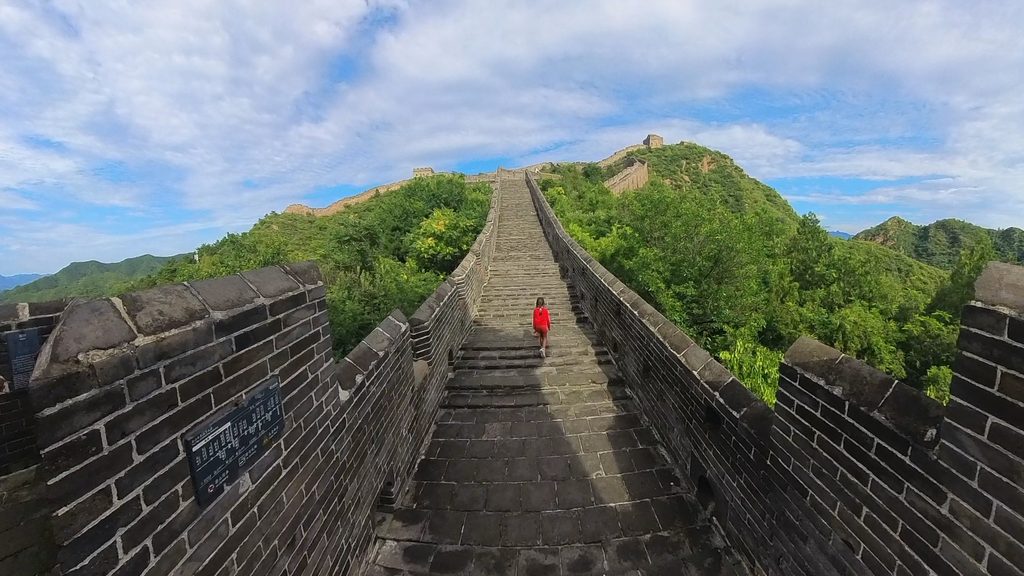
The best part was how empty it felt.
The wall stretched across the ridges in both directions, and for long stretches we barely saw anyone else.
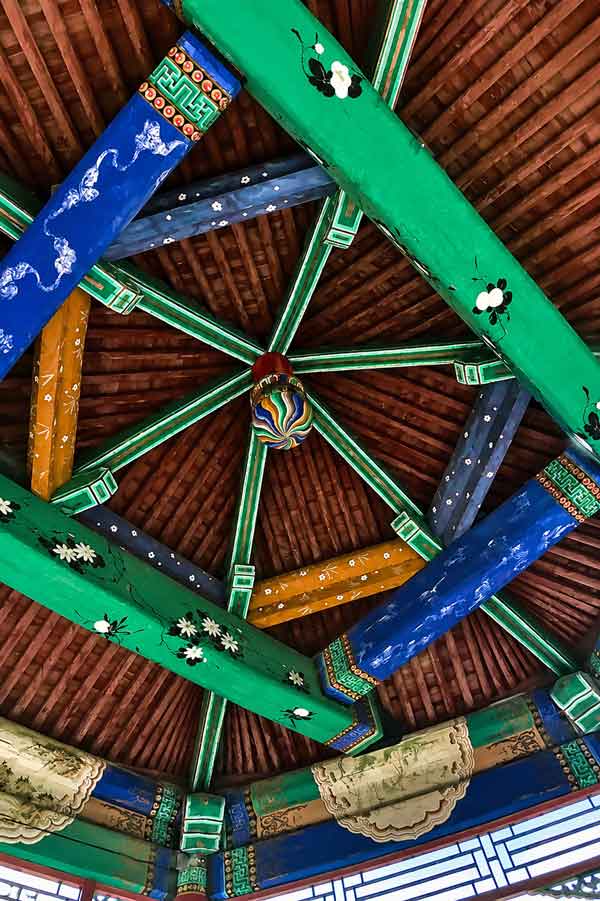
Not far from the entrance after the first climb, we also passed a traditional Chinese pavilion built into the wall. Look up when you’re inside—the painted ceiling is worth stopping for.
Jinshanling Tips
Wear shoes with good grip. Bring plenty of water, snacks and sunscreen because we didn’t encounter vendors along the section we hiked.
After the hike, we returned to the base and were able to shower before heading to Gubeikou.
After several hours hiking the Great Wall in July, that shower was very welcome.
If you’re trying to decide whether you or your kids can handle the Great Wall, read our separate guide:
What It’s Really Like to Climb the Great Wall of China — stairs, difficulty, kids, shoes and how long it takes.
That guide goes much deeper into the physical side of climbing the Great Wall, so I won’t repeat all of it here.
Night 1: Gubeikou
Sleeping Inside a Great Wall Watchtower
The local driver took us to Gubeikou and set up our tent inside a watchtower.
The tour company provided a two-person tent and sleeping bags, while our guide slept in another tent inside the same tower.
The thick stone walls made it surprisingly sheltered.
It wasn’t hotel comfortable, obviously, but we genuinely slept well.
During the night, I kept hearing what sounded like strong wind—constant and low.
The next morning we looked outside and realized it was a large river rushing below us.
We hadn’t even known it was there.
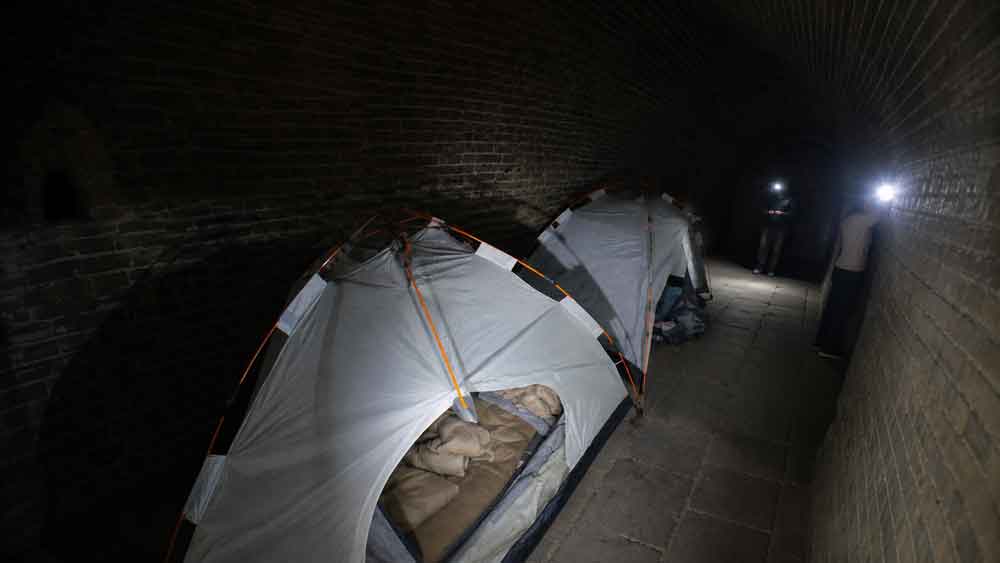
The overnight ended up being the highlight of the entire trip, but I’ve kept the details brief here because we have a separate article specifically about sleeping inside the watchtower.
Read next: We Slept Inside a Great Wall Watchtower
That article covers the actual sleeping setup, comfort, safety, what we heard during the night, camping with a child and waking up for sunrise.
Sunrise on the Great Wall
My phone died overnight, so there was no alarm.
I woke up before dawn, unzipped the tent and climbed to the top of the watchtower in the dark. Luckily, I still had spare Insta360 batteries.
A few minutes later, I started heading back down.
My daughter was already at the bottom of the stairs looking for me. She had put on my Great Wall T-shirt and come to find me.
So we went back up together.
The old stone steps were narrow and uneven, so we took them slowly.
Then we sat at the top and watched the sun come up over the mountains as the Great Wall appeared across the ridges in both directions.
Just the two of us.
Tip: Bring a headlamp and a warm layer. Even when the days are hot, it can be cooler before sunrise.
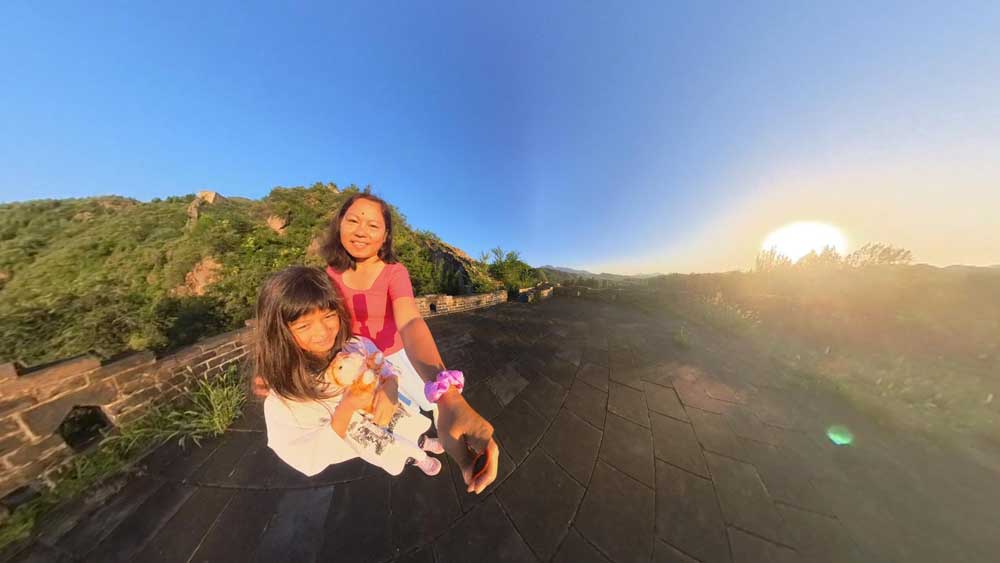
We watched the sun come up over the mountains and gradually light the wall in both directions.
That was my favorite moment of the entire two-day trip.
For the full sunrise story and overnight details:
We Slept Inside a Great Wall Watchtower →
Day 2: Mutianyu
After breakfast, we drove about an hour to Mutianyu.
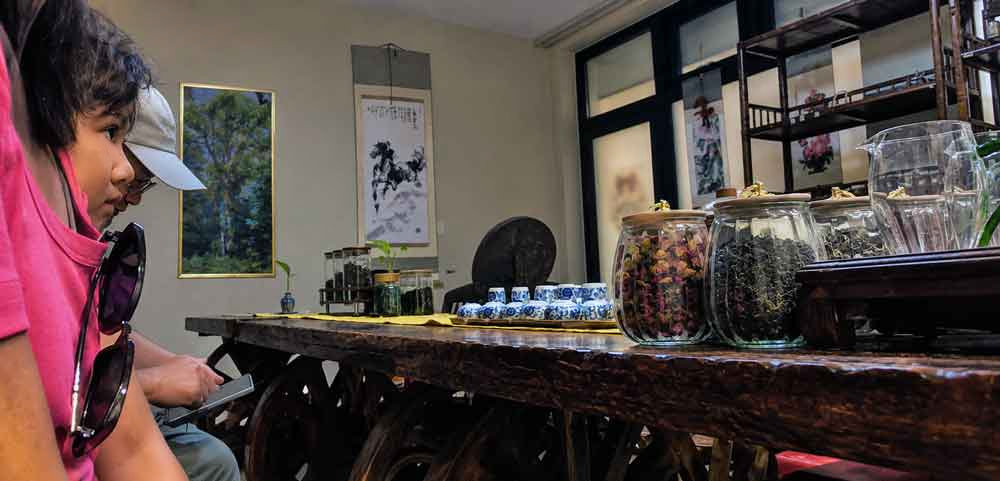
Before heading up, our guide took us to a tea shop for a short tea demonstration and tasting. We tried several varieties, and there was an opportunity to buy afterward.
We didn’t feel pressured to purchase anything—although I did end up buying Pu-er and two other teas.
Mutianyu vs. Jinshanling
Mutianyu is restored, convenient and easy to visit using the chairlift.
But after hiking Jinshanling the previous day, it didn’t feel like an upgrade. It felt like a different Great Wall experience.
Jinshanling was quieter and felt more like a hike. Mutianyu had better visitor facilities and easier access, making it a good option for families and first-time visitors.
We planned to take the famous toboggan down, but the line was very long, so we skipped it and used the chairlift both ways.
No wait. Good views. Easy decision.
We spent about two hours exploring several towers before heading back down for lunch.
Don’t let Mutianyu’s reputation as an easier section fool you—the tower steps can still be steep.
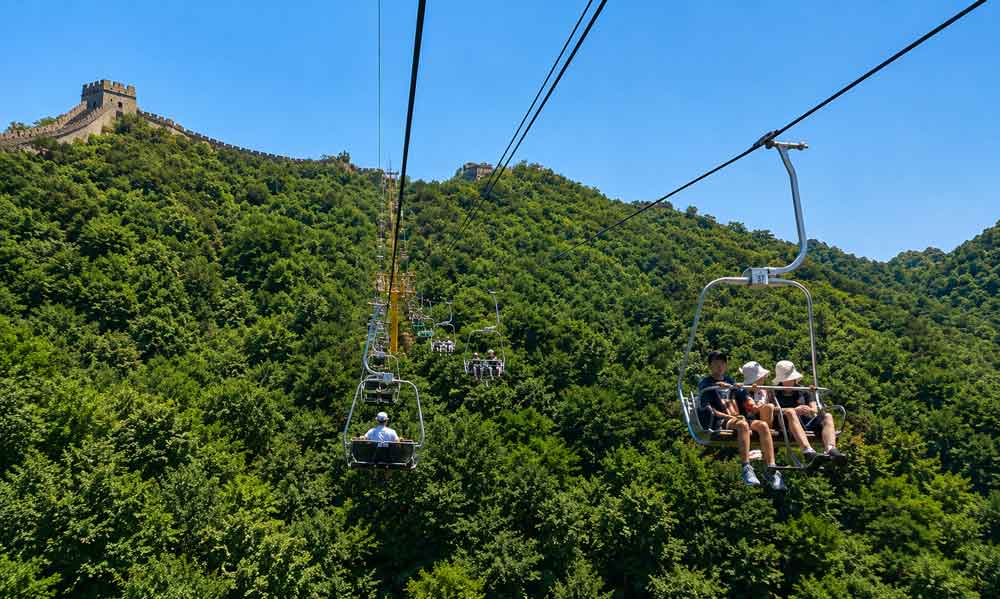
We were finished before noon in July, which worked well for us.
Lunch was a buffet included with our tour at a restaurant near Mutianyu.
What to Pack for Great Wall Camping
You don’t need much if your tour provides the camping equipment.
- Shoes with good grip
- Water and snacks
- Sunscreen and hat
- Warm layer for sunrise
- Headlamp
- Light day pack
- Portable charger
- Spare camera batteries
Our tour provided the tent, sleeping bags and meals, so we didn’t carry camping equipment during the hike.
We Slept Inside a Great Wall Watchtower →
Taking the Kids to China? Start Here.
China takes more prep than most trips.
Payments, internet, apps and transportation work differently. Get our free China Travel Cheat Sheet with the practical things we used and learned on our trip.
Enter your email and I’ll send it straight to your inbox.
No spam—just the cheat sheet and occasional practical family travel tips. Unsubscribe anytime.
2-Day Great Wall Trip FAQ
Are Jinshanling, Gubeikou and Mutianyu One Continuous Hike?
No.
We hiked Jinshanling, drove to Gubeikou for the overnight, then drove to Mutianyu the following morning.
How Long Did We Hike at Jinshanling?
Our Jinshanling hike took approximately 3–4 hours at our pace with our 6-year-old.
Where Did We Sleep?
Our tent was set up inside a watchtower at Gubeikou.
For everything about the actual overnight: We Slept Inside a Great Wall Watchtower →
How Much Did Our 2-Day Great Wall Trip Cost?
We paid ¥4,800 plus US$100 for our group, approximately US$772 at the exchange rate during our trip.
That included transportation, guide, camping equipment, entrance tickets and meals.
Did We Carry Our Own Camping Gear?
No.
Our tour company provided the tent and sleeping bags and handled the setup.
We carried only what we needed during the hike.
Could a Child Do This 2-Day Trip?
Our 6-year-old did, including the roughly 3–4 hour Jinshanling hike.
Whether another child would enjoy it depends on their comfort with longer walks, stairs and uneven terrain.
What It’s Really Like to Climb the Great Wall of China →
What if Someone Doesn’t Want to Hike Jinshanling?
Our tour setup made it possible to accommodate different plans because we had drivers coordinating the trip.
If someone in your group doesn’t want to do the hike, tell the tour company beforehand so they can explain the available options and arrange the day accordingly.
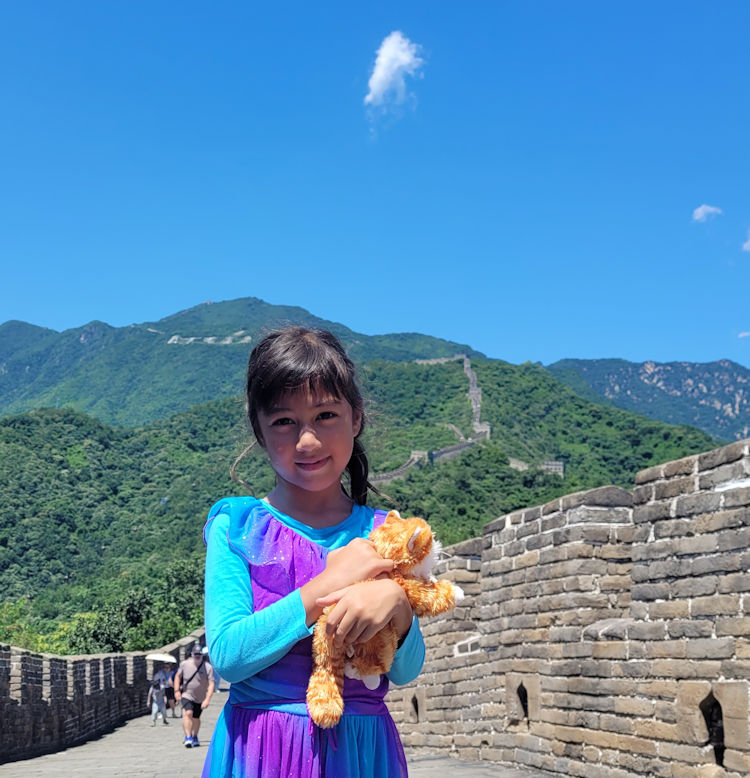
Jinshanling or Mutianyu: Which Did We Prefer?
Jinshanling.
Mutianyu is easier to visit, more developed and convenient for families. The chairlift and toboggan also make it fun for first-time visitors.
But Jinshanling was what I pictured when I imagined hiking the Great Wall—mountains, long ridgelines, tower after tower and stretches where hardly anyone else was around.
If you mainly want to see the Great Wall, Mutianyu is an excellent choice.
If you want to hike and experience it, we’d choose Jinshanling.
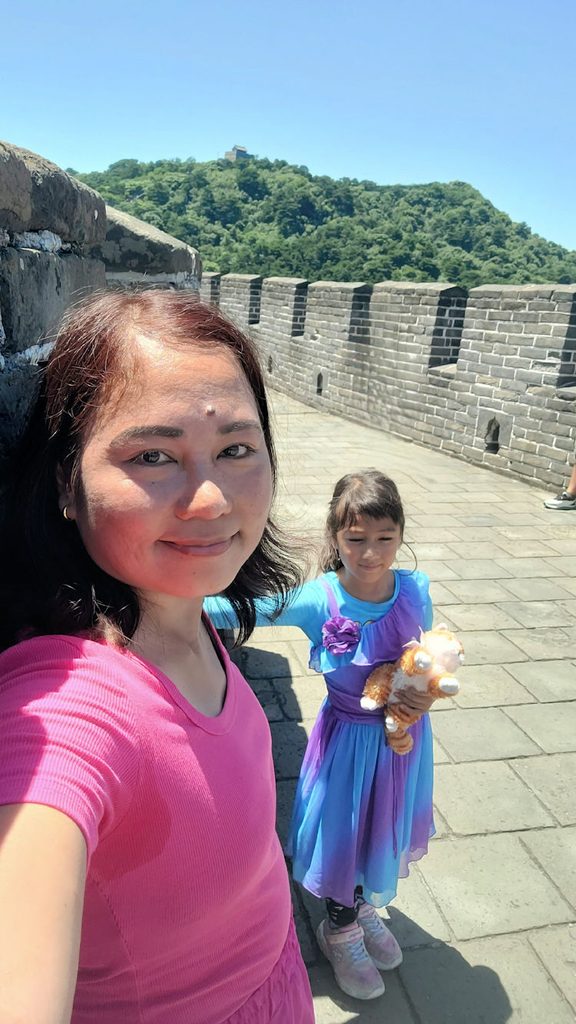
Was Camping on the Great Wall Worth It?
Absolutely.
Jinshanling was beautiful. Mutianyu was worth visiting.
But the part I remember most is waking up inside that watchtower at Gubeikou.
My phone was dead. My daughter came looking for me wearing my Great Wall T-shirt. We climbed the old stone steps together and watched the sun come up over one of the most famous places in the world.
The Great Wall is a UNESCO World Heritage Site and one of the world’s most recognizable wonders. Seeing it was already worth the trip.
Sleeping inside it made the experience something else entirely.
She was six.
Years from now, she may not remember every tower we climbed or what we ate for lunch.
But I hope she remembers waking up on the Great Wall of China.
I know I will.
Plan the Rest of Your China Trip:
- How to Pay in China as a Foreigner in 2026: Alipay, WeChat Pay, Cash & Cards
- 25 Essential Beijing Travel Tips for First-Time Visitors
- How to Get Internet in China: SIM, eSIM & VPN Guide (2026)
- What Is China Really Like? 17 Things We Didn’t Understand Until We Went
- China Travel Guide hub