Ambitious Family Travel With Young Kids: How We Decide If a Big Trip Is Actually Doable
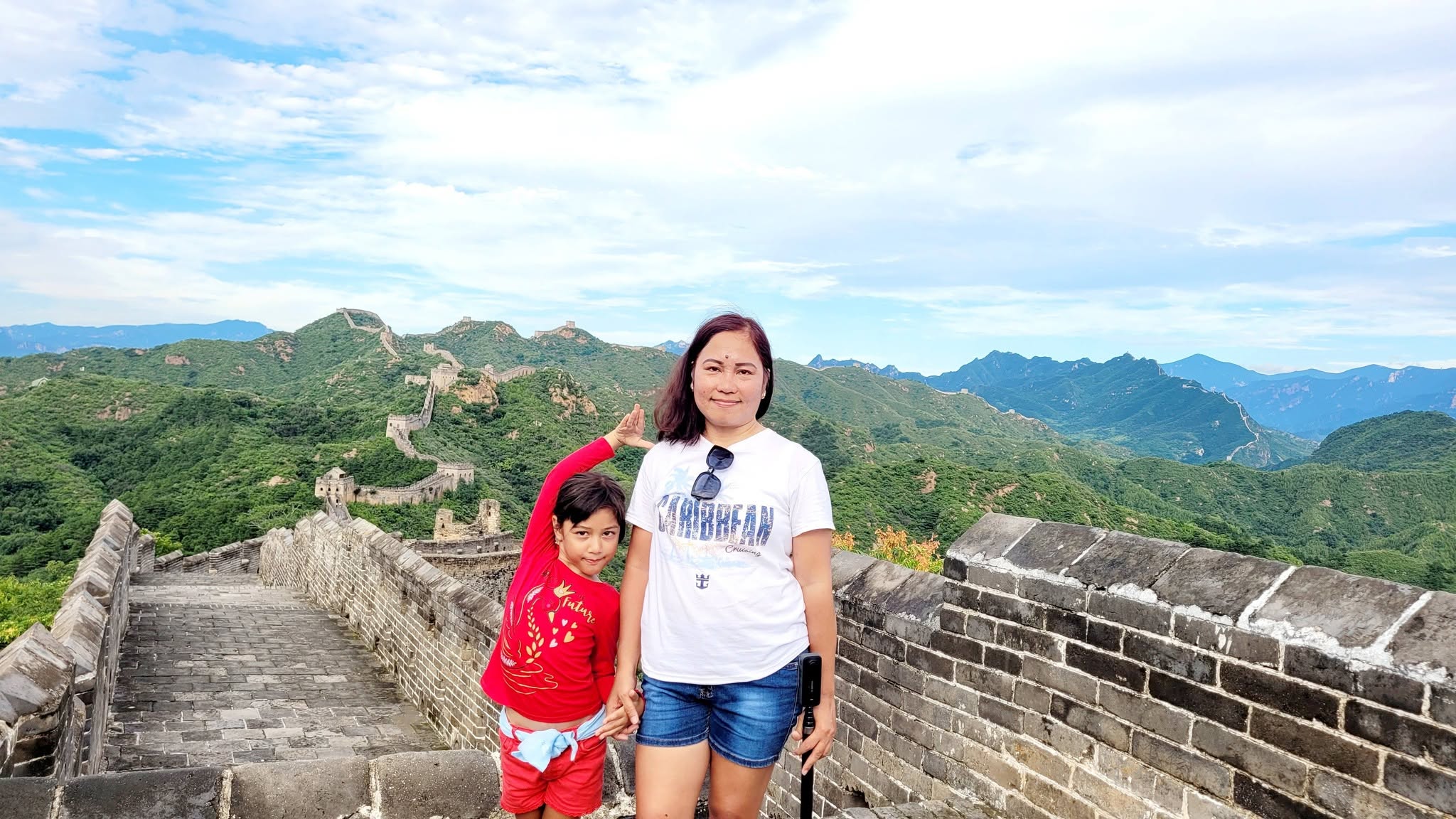
A 15-hour flight or longer. The Great Wall. A steep hike. A UNESCO site far from the nearest major city.
These are not usually the first trips people suggest when you’re traveling with a young child.
We do them anyway — but not because we think kids can do anything.
We started with road trips and national parks, then gradually moved into longer international trips, harder travel days, and places that required more planning.
Some worked exactly as planned. Some didn’t.
We missed a flight in China. We ran out of time in Zhangjiajie. The July heat made the Great Wall harder than the stairs alone would suggest. We didn’t get to snorkel in Honduras like we’d planned — we were just there on the boat. Sometimes our daughter cared more about an elevator than the landmark we traveled across the world to see.
That’s family travel.
The question we use now isn’t:
Is it kid-friendly?
It’s:
Can our child handle this trip, and can we change the parts she can’t?
That’s what this guide helps you figure out.
What's In This Article?

This post may contain affiliate links. If you book or buy through one, we may earn a small commission at no extra cost to you.
What Counts as Ambitious Family Travel?
For us, it’s any trip that makes you stop and ask: can we really do this with a young kid?
That’s not the same question as “is this a good destination,” and it’s not answered by age alone. In our experience it comes down to a handful of concrete variables that either exist on a trip or don’t:
None of those are dealbreakers on their own. A trip can have one or two of them and still be very doable. A trip with all five is a different kind of undertaking — not impossible, just one that needs to be planned differently, which is the whole point of this post.
How We Actually Solve Each One
None of these five things are reasons to cancel a trip. They’re just problems with known fixes — most of them boring, logistical, and solvable before you ever leave the house.
In practice, for us, “ambitious” has looked like:
- a long-haul flight
- hiking or lots of stairs
- camping
- a remote UNESCO site
- a complicated train route
- extreme heat or cold
- several weeks overseas
- a destination with very little built for children
A trip can be easy for one family and miserable for another. Age matters, but so do walking ability, sleep, food, temperament, weather, and how aggressive the itinerary is. That’s why the framework below starts with the child in front of you, not a destination’s reputation.
Is Your Child Ready?
We don’t decide based on age alone.
Our daughter was already used to walking and traveling before some of our bigger trips, so that mattered more than the number on her birthday.
A child who regularly walks several miles may handle a city or hiking day differently from a child who rarely does.
Use what your child already handles in real life.
Should We Take the Kid?
Look at: your child + the destination + the itinerary.
You do not need six perfect answers. You need to know where the weak points are.
The Five Things We Check Before Booking
1. Physical Difficulty
Count the stairs, walking, elevation, heat, and lack of shade — not just the advertised length of the attraction.
The Great Wall is a good example.
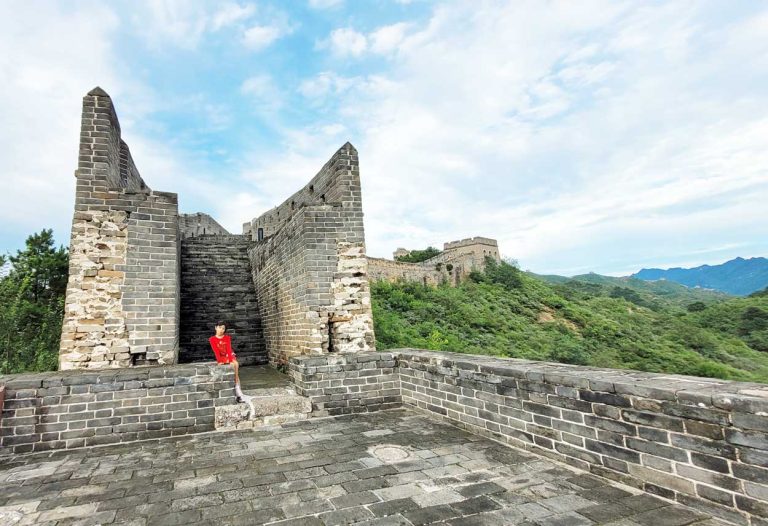
The issue was not simply walking along a wall. Some sections are steep. The steps are uneven. In July, we also had heat and limited shade.
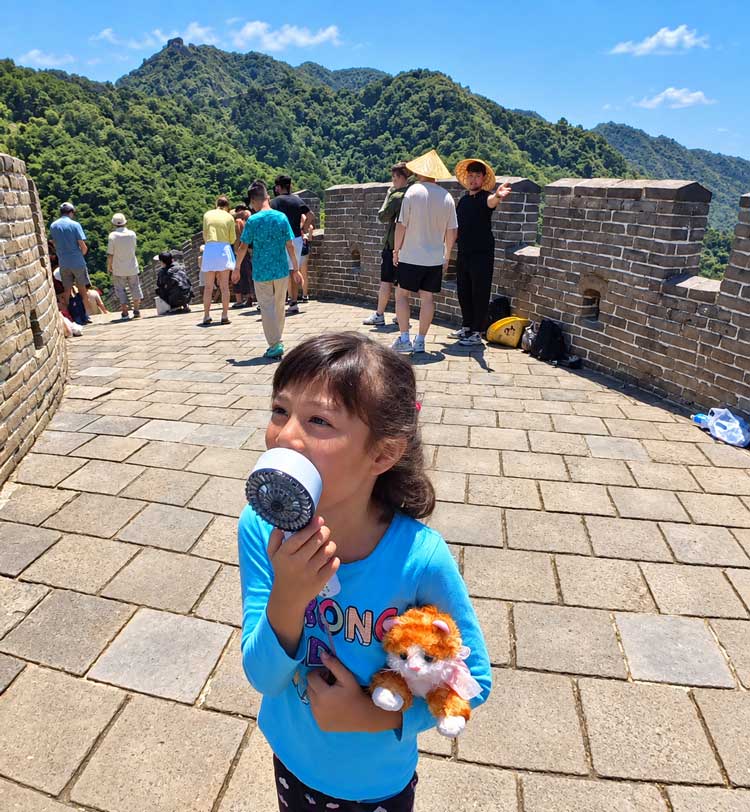
We brought plenty of water, took our time, and used a portable neck fan for hot outdoor sightseeing to keep our daughter comfortable on the steepest, most exposed sections. For a full breakdown of which sections to pick, see our guide to how hard the Great Wall of China actually is to climb with kids.
2. Transportation Difficulty
Sometimes getting there is harder than the attraction.
A trip might look like: flight → train → taxi → shuttle → hike.
That is very different from one direct flight and a hotel transfer.
Check:
- number of connections
- longest travel day
- airport transfer time
- late-night transportation
- ticket requirements
- internet access
- what happens if something is delayed
We missed a flight in China and lost time we had planned for Zhangjiajie. Because of that, we did not see some of its biggest attractions.
The lesson was simple: build around the transportation, not just the sightseeing.

We usually book our first night’s hotel near the airport or train station before we leave home.
For complicated arrivals, we sometimes pre-book a private airport transfer so we’re not figuring out transportation while jet-lagged.
For remote sights, compare guided tour options for hard-to-reach attractions before assuming you’ll figure out transportation on arrival.
3. Find the Hardest Day
Do not test a trip against its easiest day.
Find the one with:
- the overnight flight
- the longest hike
- the hardest transfer
- an early start
- the most heat
- the least flexibility
Then ask: can my child handle this? And: can I handle it while also taking care of my child?
If the hardest day barely works on paper, fix the day. Shorten the activity. Add rest. Move something else. Remove something.
You do not have to cancel the whole trip.
We also check Facebook groups specific to the destination. Other parents who just did the trip will tell you what looked hard on paper. We take notes from there — the real walking distance, the actual wait time, the thing nobody mentions in the official listing.
4. Know How to Leave
Before a difficult day, we want to know:
- Can we turn around?
- Can we take a shorter route?
- Is there a cable car or shuttle?
- Is there shade?
- Where is the bathroom?
- Is food nearby?
- Can we get back without finishing the full route?
This matters more than whether an attraction carries a “family-friendly” label.
Planning a Big Trip With a Young Kid?
Get our free 13-page Pre-Trip Planner to figure out what your child can realistically handle, where to slow down, and what to plan before you book.
No spam. Just practical family travel tips. Unsubscribe anytime.
Get the Free Ambitious Family Travel Pre-Trip Planner
Not sure if a big trip is realistic with a young child?
Use the same tools we use before we book: the “Should We Take the Kid?” scorecard, destination readiness check, 1+1 itinerary formula, and backup planning worksheets.
No spam—just the planner and occasional practical family travel tips. Unsubscribe anytime.
5. Give the Child Something They Care About
That does not have to mean a playground.
It could be:
- a cable car
- ice cream
- a boat
- swimming
- animals
- a train
- a costume
- an elevator
At Zhangjiajie’s 72 Wonder Building, our daughter loved the elevators and escalators. We noticed the architecture and night shows. She noticed the elevators.
Fine by us.
Our 1 + 1 Rule
This is probably the biggest change we made once our trips became more ambitious.
1 main thing + 1 optional thing.
you came
time & energy
travel day
Do the reason you came. Add the second activity only if everyone still has the time and energy.
If the second activity happens, great. If not, we eat, wander, rest, swim, or go back to the hotel.
That is still a travel day.
Plan Around Energy, Not Google Maps
Two attractions may be 20 minutes apart and still be too much for one day.
A morning hike changes the afternoon. So does heat. So does jet lag. So does a bad night of sleep.
We think more in terms of high effort → recovery → high effort rather than stacking activities by proximity.
Long Flights Are Only One Part of the Problem
A long-haul flight can be tiring, but we pay just as much attention to the first day after landing.
Leave room for:
- immigration
- baggage delays
- food
- showers
- transportation
- sleep
Do not put your most important attraction immediately after arrival.
If everyone sleeps well on the plane, you gain time. If not, you have not ruined the trip before it starts.
There are a handful of tools that do this, but the one you can use is Point.me, a free tool that shows both cash fares and award availability across loyalty programs side by side — it’s what we check before deciding whether to use cash or miles.
Heat Can Change the Entire Day
We visited China in July.
At the Great Wall, the problem was not only the stairs. It was: steep stairs + summer heat + limited shade.
We slowed down, carried water, and used a portable fan for our daughter.
Before an outdoor day, check:
- heat
- humidity
- shade
- elevation
- wind
- rain
- trail exposure
Temperature alone does not tell you how hard the day will feel.

Pack for Problems, Not Every Possible Situation
Family packing can get excessive fast. We focus on what can actually derail the day.
For us, that usually means:
- water
- snacks
- sunscreen
- hat
- portable fan in hot weather
- rain protection
- basic medicine
- tissues or wipes
- chargers
- power bank where permitted
- offline tickets and addresses
Do not assume battery rules are the same everywhere. Check current airport and airline requirements before you travel.
- The compact portable fan we use on hot sightseeing days
- Our small daypack for long sightseeing days
- Space Saving Compression Bags for Clothes
Internet Is Not Optional on Some Trips
You may need your phone for:
- maps
- translation
- rides
- train tickets
- hotel messages
- attraction tickets
- airline changes
- payments
Before leaving, know: how will we get online? Then ask: what happens if it stops working?
We save important information offline:
Screenshots are boring until your internet disappears. If China (or a similarly locked-down destination) is on your list, our guide to getting internet in China with an eSIM, local SIM, or VPN walks through what actually works.
If we’re using an eSIM for international data, we usually install it before departure.
Build the Backup Before You Need It
Our Basic Backup Check
- Flight canceled? Know the alternate route.
- Child exhausted? Know what gets skipped.
- Heavy rain? Have one indoor option.
- No internet? Keep screenshots offline.
- Attraction closed? Know what is nearby.
- Everyone is done? Go back to the hotel.
We missed a flight in China. That meant less time in Zhangjiajie. We could have tried to cram everything back into the itinerary. We did not.
I would rather miss an attraction than turn the rest of the trip into a race. We may go back someday. That’s fine.
A Destination Does Not Need to Be Built for Kids
We do not plan every trip around children’s attractions.
Our daughter has visited:
- UNESCO sites
- museums
- temples
- hiking trails
- historic sites
- busy cities
- outdoor attractions
She does not need to understand the historical importance of everything we see. Sometimes she notices something completely different. That still counts as travel.
A destination does not need playgrounds to work with a child. But an adult itinerary usually needs editing.
Using Miles and Points for Bigger Trips
Flights for a family can get expensive fast.
Miles and points can help, but we do not force every trip into an award booking. We compare: cash price vs. points required vs. taxes and fees vs. flexibility.
Sometimes the award is clearly better. Sometimes paying cash is easier.
We had an Aeroplan issue where support was helpful, but the mileage amount was small enough and the refund process had enough hassle that we simply charged it to experience.
Miles are a tool. They are not the trip. If you want the deeper dive on which cards and programs actually pay off for family trips, that lives in our travel hacking guide for families — that’s also where we’d keep most credit-card and points affiliate links instead of stuffing them into this post.
What We Book Before We Leave
We like to have the backbone settled.
We usually book:
- flights
- first hotel
- major timed sights
- critical transportation
- visa requirements
- internet plan
We usually leave flexible:
- optional attractions
- some meals
- shopping
- rest time
- extra sightseeing
- exact daily timing
The more complicated the destination, the more important the backbone becomes. But we still leave room to change the day.
Our Pre-Booking Checklist
Before we book, we want to know:
If several answers are no, that does not automatically mean do not go. It may mean change the trip.
When We Would Wait Until They’re Older
There are trips we would postpone. Usually because of:
- safety
- extreme physical demands
- very high altitude
- long sections with no exit
- activities requiring a minimum age
- conditions we do not think our child can handle yet
We are not trying to prove a six-year-old can do everything. The goal is to travel farther without making everyone miserable.
You Do Not Have to See Everything
We missed some major sights in Zhangjiajie because we lost time. The trip was not ruined.
We would rather enjoy fewer places than rush through everything because we feel obligated to “get our money’s worth.”
You may never return. You still do not have to see everything. And sometimes what you miss becomes the reason to come back.
Get the Free Ambitious Family Travel Pre-Trip Planner
If you’re looking at a destination and asking: can we actually do this with our kid? — use the same framework before you book.
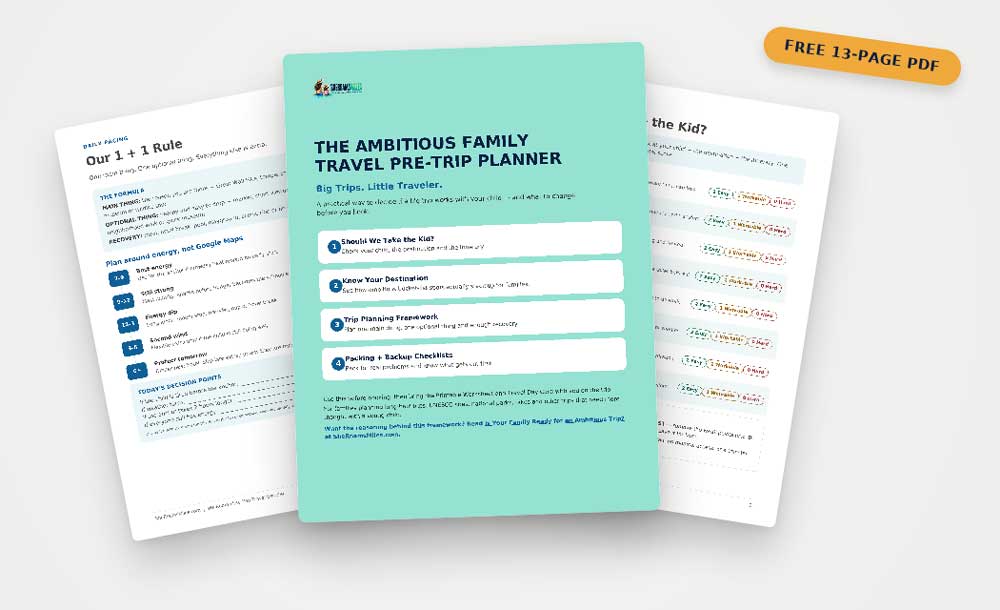
The free SheRoamsMiles Ambitious Family Travel Pre-Trip Planner includes:
- Should We Take the Kid? scorecard
- destination reality check
- hardest-day assessment
- 1 + 1 itinerary planner
- transportation planning
- packing checklist
- backup-plan worksheet
- miles and points check
- printable travel-day pages
You do not always have to wait until they’re older. Sometimes the trip just needs to be planned differently.
Get the Free Ambitious Family Travel Pre-Trip Planner
Not sure if a big trip is realistic with a young child?
Use the same tools we use before we book: the “Should We Take the Kid?” scorecard, destination readiness check, 1+1 itinerary formula, and backup planning worksheets.
No spam—just the planner and occasional practical family travel tips. Unsubscribe anytime.
We Roam First. You Travel Smarter.