
Death Valley National Park Itinerary: How to Spend 3 Days
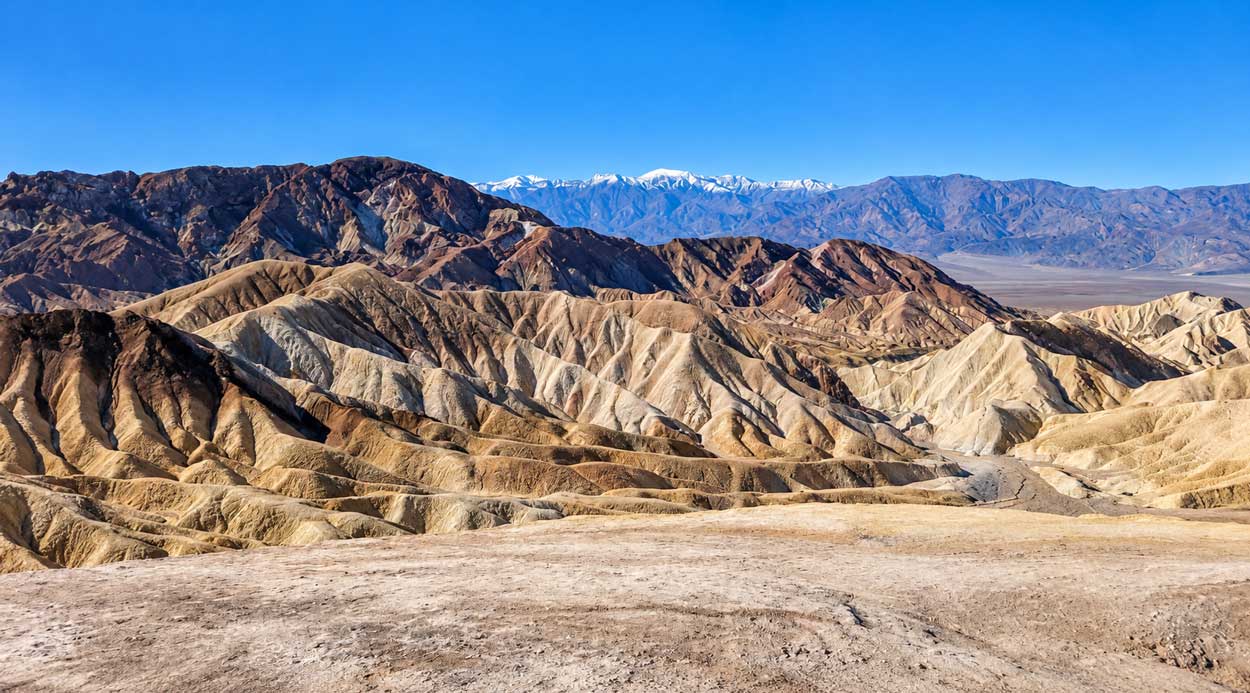
Death Valley National Park was one of the highlights of our November road trip from Las Vegas. We flew from Houston (IAH) to Las Vegas on United miles, then spent three days exploring the park with my 5-year-old daughter, walking across salt flats, climbing sand dunes, hiking through a canyon and stopping at viewpoints overlooking miles of desert.
The sand dunes were her favorite, and we could’ve stayed there much longer.
Death Valley is enormous, and the distances between attractions can be surprising. With three days, you can visit the famous sights and explore different parts of the park without spending your entire trip rushing between stops.
Here’s how I’d organize a three-day Death Valley National Park itinerary based on the places we visited, including what the walks involved and what worked for us with a young child.
Is 3 Days Enough for Death Valley National Park?
Yes. Three days is a good amount of time to explore Death Valley National Park’s major attractions, including Badwater Basin, Zabriskie Point, Dante’s View, Mesquite Flat Sand Dunes and Natural Bridge. We spent three days in the park during our November trip, with time for short hikes, scenic overlooks and playing in the dunes. A car is essential because attractions are spread across a large area.
What's In This Article?
Disclaimer: This post contains affiliate links. They don’t cost you anything, but they help keep SheRoamsMiles running.
Our 3-Day Death Valley National Park Itinerary at a Glance
This suggested route groups nearby attractions together to make planning easier.
| Day | Main Stops | What to Expect |
|---|---|---|
| Day 1 | Dante’s View, Zabriskie Point | Two spectacular viewpoints, with short walks and scenic driving |
| Day 2 | Devil’s Golf Course, Natural Bridge, Badwater Basin | Salt flats, unusual salt formations and a canyon hike |
| Day 3 | Mesquite Flat Sand Dunes, Father Crowley Vista Point | Time on the dunes, then the longest driving day. Father Crowley is far west, so start early if you’re returning to Pahrump or Las Vegas |
If you’re entering or leaving through a different side of the park, reverse the order to suit your route.
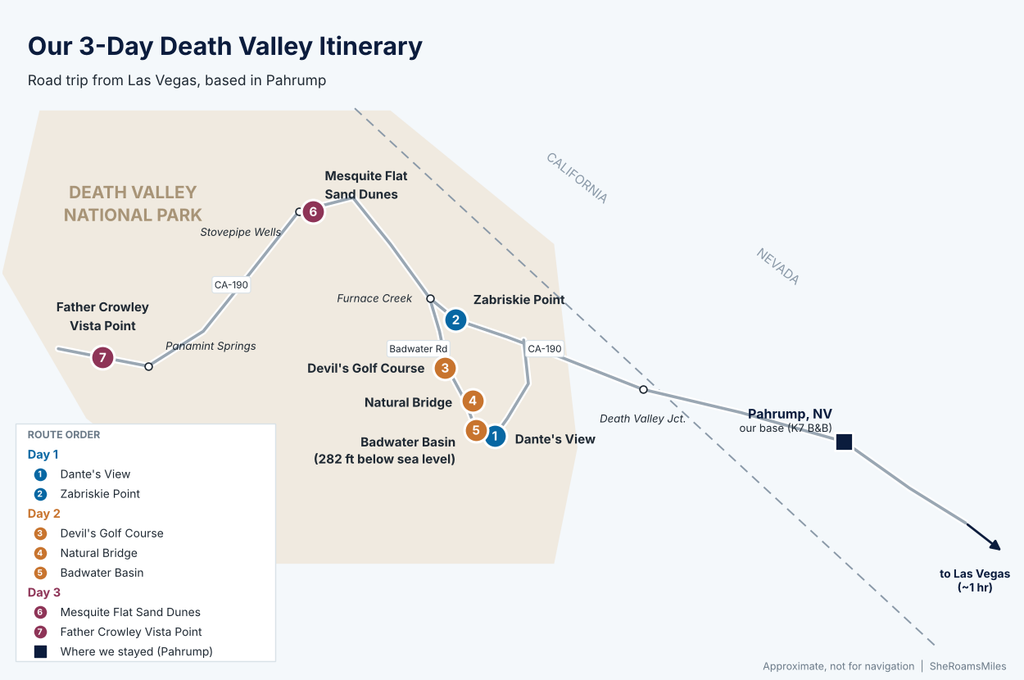
We stayed in Pahrump, which made Day 3 about five hours of round-trip driving. Staying inside the park cuts that down a lot.
If You Stay Inside the Park
Split your nights between Furnace Creek and Stovepipe Wells, and the same stops fit into shorter driving days. Here’s how I’d route it from Las Vegas:
| Day | Route | Driving |
|---|---|---|
| Day 1 | Las Vegas → Dante’s View → Zabriskie Point → overnight in Furnace Creek | About 3 hours total, mostly the drive in |
| Day 2 | Furnace Creek → Devil’s Golf Course → Natural Bridge → Badwater Basin → overnight in Stovepipe Wells | About 2 hours, with time for the dunes at sunset |
| Day 3 | Mesquite Flat Sand Dunes → Father Crowley Vista Point → exit west, or return to Las Vegas | 45 minutes to Father Crowley; about 4 hours from there back to Las Vegas |
If you’re heading back to Las Vegas on Day 3 and want a shorter day, skip Father Crowley and leave from the dunes. It’s about 2 hours 45 minutes to Las Vegas from Stovepipe Wells.
Day 1: Dante’s View and Zabriskie Point
Dante’s View
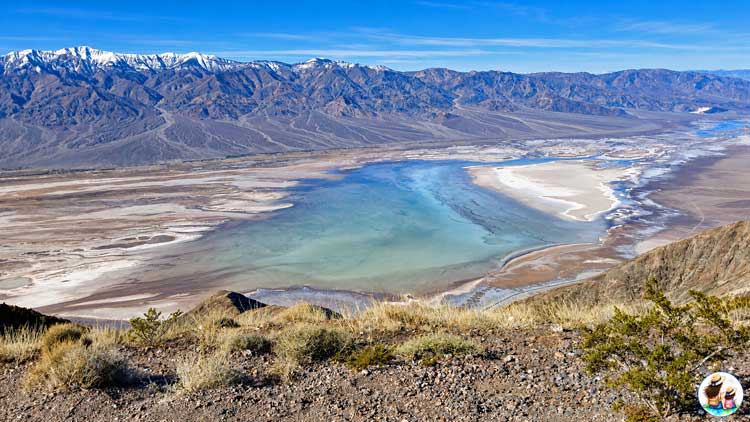
Dante’s View sits high above the valley floor, with sweeping views of Badwater Basin and the mountains beyond. Looking down from here shows how dramatically the landscape changes within the park.
The drive climbs considerably in elevation, so conditions at the top can feel different from those on the valley floor.
Zabriskie Point
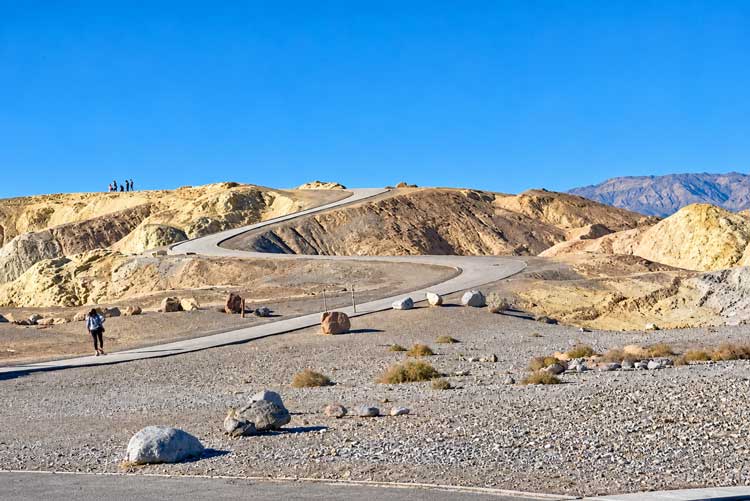
Zabriskie Point is one of the most recognizable viewpoints in Death Valley, overlooking layers of golden and brown badlands.
A short uphill paved path leads from the parking area to the overlook. The landscape looks sculpted, with ridges and valleys spreading out in every direction.
It sits right off CA-190, so it’s an easy stop after Dante’s View. You’ve seen the valley from above, and here you get a close look at the badlands without committing to a long hike.
If you’re coming from Las Vegas or Pahrump through the eastern side of the park, these two viewpoints make a practical combination.
Day 2: Devil’s Golf Course, Natural Bridge and Badwater Basin
This day brings you onto the valley floor, where you’ll see some of Death Valley’s most unusual landscapes up close. Heading south from Furnace Creek on Badwater Road, you’ll reach these three stops in this order, with Badwater Basin last.
Devil’s Golf Course
Devil’s Golf Course is covered in rough, jagged salt formations. They’re sharp and irregular, as if the ground froze mid-motion.
This is mainly a place to look closely at the formations and take photos. Watch your footing if you step away from the parking area because the salt is uneven and sharp.
Access is along an unpaved road, so check road conditions before including it in your itinerary.
Natural Bridge
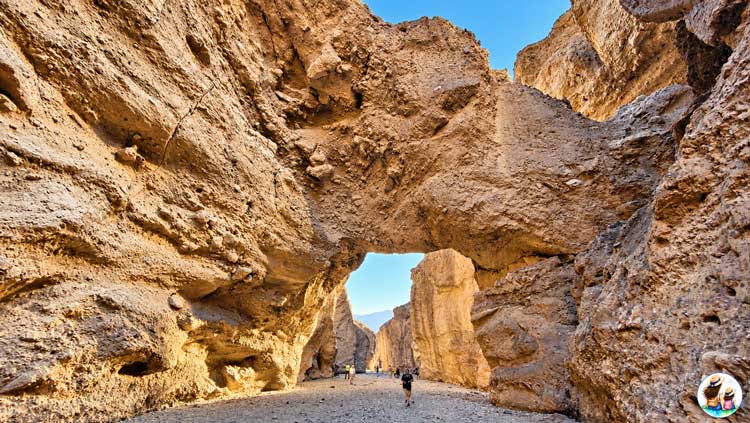
Natural Bridge is a short canyon hike leading to a large rock arch spanning the canyon walls. We did the walk with our daughter.
The trail follows a rocky wash, with some uneven footing and a gradual uphill section on the way in. The bridge is the main attraction, and the surrounding canyon walls make the walk worthwhile. The National Park Service lists the main Natural Bridge walk as about one mile round-trip.
The access road is unpaved and can be rough, so check its condition before driving in.
For a family visiting in cooler weather, this is a manageable hike to combine with the nearby valley-floor attractions.
Badwater Basin
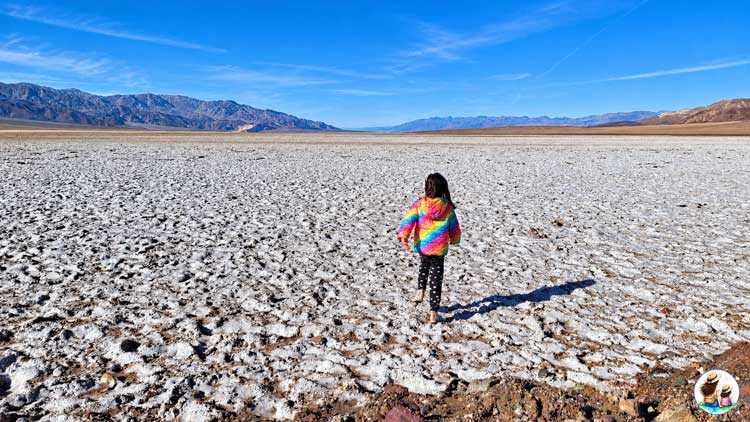
Badwater Basin is the lowest point in North America, at 282 feet below sea level.
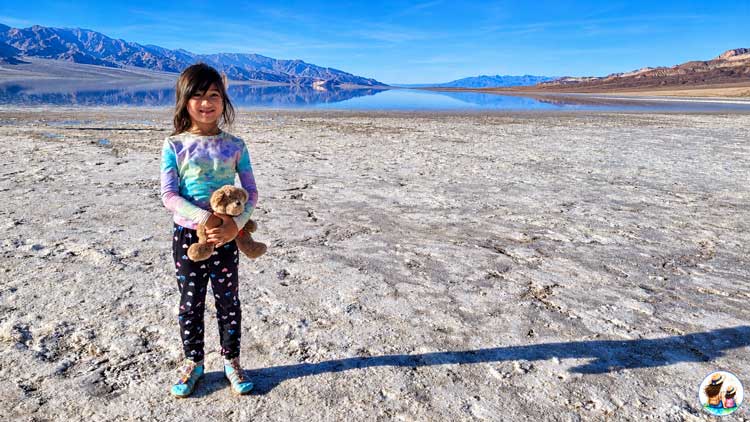
From the parking area, you can walk out onto the salt flats. The farther you go, the more you can see the patterns the salt forms across the basin.
We walked onto the salt flats with our daughter, and it turned out to be one of her favorite places in the park. There was plenty of room to walk around, and the unusual ground kept her interested.
You can keep this visit fairly short or walk farther out. Allow time for the return walk, especially if you want to reach the more distinct salt polygons.
Day 3: Mesquite Flat Sand Dunes and Father Crowley Vista Point
Mesquite Flat Sand Dunes
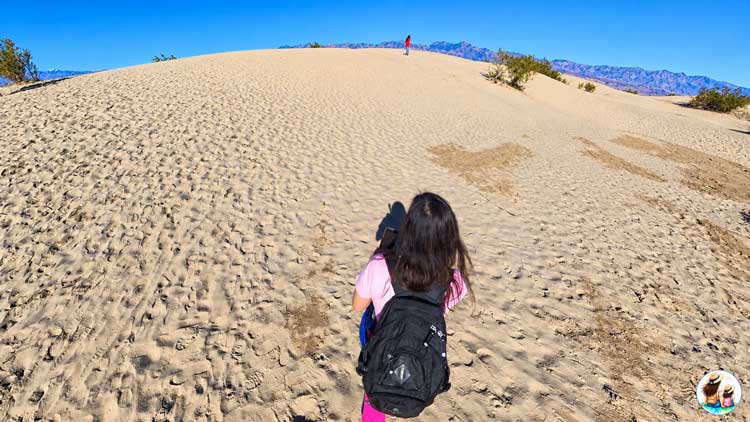
If I had to choose one place where our daughter had the most fun in Death Valley, it would be Mesquite Flat Sand Dunes. We climbed all the way to the top, and she treated the sand like a giant playground. She slid down the slopes, climbed back up and made friends with other children who were playing there.
There isn’t a marked trail through the dunes, so you can walk as far as you like and pick which dunes to climb. The tallest is about 100 feet high. Walking through deep sand takes more effort than it looks, especially on the steeper slopes. Going downhill is much easier.
If you’re visiting with children, give them time to play. A quick photo stop here can easily turn into a much longer visit.
Father Crowley Vista Point
Father Crowley Vista Point is on the western side of Death Valley, overlooking the dark lava walls of Rainbow Canyon. After the salt flats and dunes, it’s another change of scenery.
It’s a long drive from the central attractions, so it fits best if your route takes you toward the park’s western entrance or Panamint Valley.
We drove back to Pahrump afterward, which made for a long day, and we were still driving out of the park after dark. If you’re leaving Death Valley heading west, it’s an easy stop on your way out.
How Many Days Do You Need in Death Valley?
You can see several of Death Valley’s most famous attractions in one day, especially if you stay around Furnace Creek and Badwater Road.
With two days, you can add more walks and spend longer at the viewpoints and dunes.
Three days gives you more flexibility to explore the park’s different areas.
| Time Available | What You Can Realistically Do |
|---|---|
| 1 day | Zabriskie Point, Badwater Basin, Dante’s View and selected nearby stops |
| 2 days | Add Natural Bridge, Devil’s Golf Course and Mesquite Flat Sand Dunes |
| 3 days | Explore the central attractions at a comfortable pace and include farther stops such as Father Crowley Vista Point |
We had three days and found plenty to fill them, even with a young child.
Visiting Death Valley From Las Vegas for One Day?
If you have limited time or would prefer someone else to handle the driving, a guided day tour from Las Vegas is another way to see Death Valley’s major viewpoints.
Explore Death Valley day tours from Las Vegas →
Visiting Death Valley With Kids
Our daughter was five during this trip, and she walked on her own at every stop we made.
The variety helped keep her interested. One stop involved climbing sand dunes, another meant walking across salt flats, and others offered big views after relatively short walks.
We brought our own food into the park, which worked well for our days of sightseeing. Having snacks and water in the car made it easy to stop whenever we needed.
For younger children, I’d prioritize the dunes, Badwater Basin and a couple of viewpoints, then add a short hike if everyone still has energy.
Where to Stay for a 3-Day Death Valley Trip
Where you stay makes a big difference because the park covers such a large area.
Furnace Creek is a convenient base for the central attractions, including Badwater Basin, Zabriskie Point and the roads leading toward Dante’s View.
Stovepipe Wells is closer to Mesquite Flat Sand Dunes and works well if you plan to explore the park’s northern or western areas.
Pahrump, Nevada, is where we stayed. We booked K7 Bed and Breakfast and paid cash. Pahrump is about an hour from Las Vegas and a little over an hour from Furnace Creek, so it works well if you’re arriving from Vegas. Staying outside the park adds driving time, especially to the dunes and the western side.
For three days of sightseeing, I’d compare total driving time from each hotel along with the nightly price.
Compare Death Valley hotels and availability →
Driving Around Death Valley National Park
You’ll need a vehicle to follow this itinerary. Death Valley has no public transportation within the park, and its attractions are separated by long stretches of desert road.
A few practical things to know:
- Fuel: Gas is available at Furnace Creek, Stovepipe Wells and Panamint Springs. Fill up before long drives.
- Navigation: Download offline maps before entering the park. Cell service is limited.
- Roads: Some attractions have unpaved access roads, including Natural Bridge and Devil’s Golf Course.
- Food and water: Bring supplies for the day, particularly when exploring farther from the main visitor areas.
- Daylight: Account for driving time between your final stop and your accommodation.
Check the National Park Service’s current Death Valley conditions before setting your route, since road access can change.
Need a Rental Car for Death Valley?
We rented from ACE Rent A Car in Las Vegas and paid cash. If you’re flying into Las Vegas, renting a car gives you the flexibility to visit the viewpoints, hikes and sand dunes at your own pace. Check the rental terms and road restrictions if your itinerary includes unpaved access roads.
Compare rental cars from Las Vegas →
Best Time to Visit Death Valley
We visited during my daughter’s Thanksgiving break, which is a good time of year for walking and exploring the lower elevations.
Death Valley’s summer temperatures can be extreme, especially around Badwater Basin and Furnace Creek. Late fall, winter and early spring generally offer more comfortable conditions for sightseeing and hiking.
Even in cooler months, temperatures can vary significantly between the valley floor and higher viewpoints such as Dante’s View.
Death Valley National Park Entrance Fee
The standard entrance fee is $30 per private vehicle, valid for seven consecutive days.
Death Valley is open 24 hours a day, year-round, although individual roads and facilities may close. You don’t need a reservation to enter the park.
For current pass information, visit the official Death Valley entrance fees page.
Is Death Valley National Park Worth Visiting for 3 Days?
Yes. Three days gave us time to see the salt flats at Badwater Basin, the high views at Dante’s View and the sand dunes near Stovepipe Wells.
My favorite part was watching how much our daughter loved the park, from climbing the dunes to playing with other kids at the top.
For a trip from Las Vegas, Death Valley is an excellent destination if you enjoy scenic drives, unusual landscapes and short hikes.
We also visited Valley of Fire State Park and Red Rock Canyon during our Nevada and California trip, making it a memorable week of desert landscapes.
If you’re starting your trip in Las Vegas, you can also spend time exploring the city before heading into the desert. I’ve shared more ideas in my guide to things to do in Las Vegas.
More National Park and Family Travel Guides
- Death Valley With Kids: What Our 5-Year-Old Enjoyed Most
- Big Bend National Park Itinerary
- Craters of the Moon National Monument
Get the Free Ambitious Family Travel Pre-Trip Planner
Not sure if a big trip is realistic with a young child?
Use the same tools we use before we book: the “Should We Take the Kid?” scorecard, destination readiness check, 1+1 itinerary formula, and backup planning worksheets.
No spam—just the planner and occasional practical family travel tips. Unsubscribe anytime.


One Comment