Craters of the Moon National Monument: Things to Do and Visitor Guide
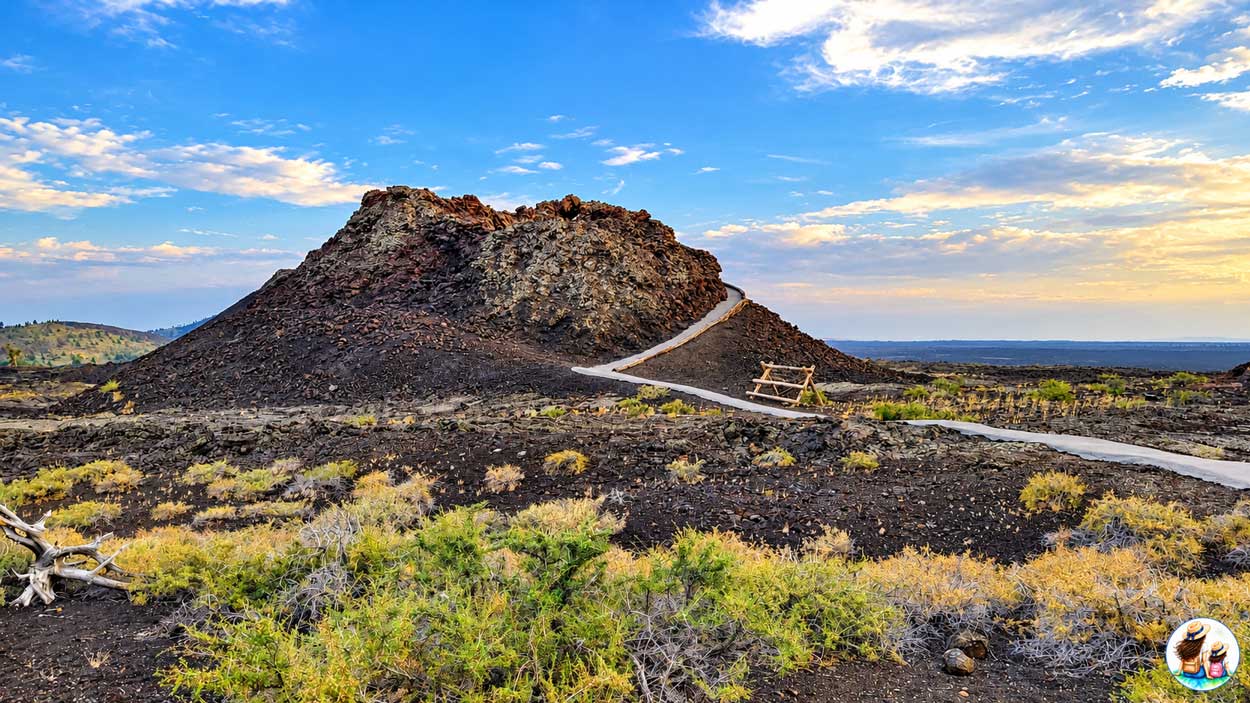
We stopped at Craters of the Moon National Monument in Idaho in mid-September, on a road trip between Montana and Utah with our 2-year-old daughter. We drove the Loop Road, walked the short trails and tent camped at Lava Flow Campground.
Craters of the Moon is also remote. The monument sits along a long stretch of highway between small Idaho towns, with few places to eat, refuel or find a hotel nearby. That makes planning especially important if you’re traveling with young children or hoping to camp.
Here’s what you can see at Craters of the Moon, how much time to spend, where to stay and how to fit it into a longer road trip.
Quick Answer: Is Craters of the Moon Worth Visiting?
Yes. Craters of the Moon National Monument is worth visiting for its lava fields, volcanic cones, scenic drive and lava tube caves. Most visitors can explore the main attractions in about 2–4 hours.
The 7-mile Loop Road connects short trails and volcanic viewpoints. You can also camp inside the monument at Lava Flow Campground, but the landscape is exposed, so check the wind forecast first. It also works well as an overnight or half-day stop between Yellowstone, Grand Teton, Sun Valley, Boise and Salt Lake City.
What's In This Article?
Disclaimer: This post contains affiliate links. They don’t cost you anything, but they help keep SheRoamsMiles running.
Where Is Craters of the Moon National Monument?
Craters of the Moon National Monument and Preserve is in south-central Idaho along U.S. Highway 20/26/93. The visitor center is about 18 miles southwest of Arco and 24 miles northeast of Carey.
Address: 1266 Craters Loop Road, Arco, ID 83213
The monument is surrounded by open countryside, and you can drive for miles without passing a restaurant, gas station or hotel. Plan your fuel, meals and overnight stay before you arrive.
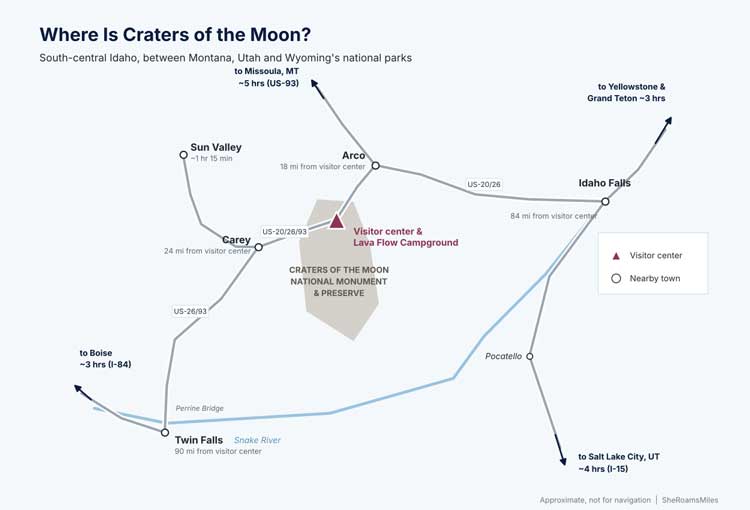
How Far Is Craters of the Moon From Nearby Towns?
The National Park Service warns that GPS directions can be unreliable. Navigate directly to the Robert Limbert Visitor Center so you don’t end up on remote unpaved roads.
The National Park Service warns that GPS directions can be unreliable. Navigate directly to the Robert Limbert Visitor Center so you don’t end up on remote unpaved roads.
Craters of the Moon as a Road Trip Stop
We stopped at Craters of the Moon overnight on a road trip between Montana and Utah. It sits along US-93 and US-20/26, so it’s an easy overnight or half-day break between bigger destinations in the region.
What Makes Craters of the Moon Special?
Craters of the Moon looks unlike most places in Idaho, with black lava flows, cinder cones, spatter cones and volcanic rock formations.
The landscape formed through repeated eruptions along the Great Rift. Some created large lava fields, and others left behind cones and hollow lava tubes. The most recent eruptions happened about 2,100 years ago.
The name comes from the terrain’s moonlike look. Volcanoes, not meteors, created the craters.
Best Things to Do at Craters of the Moon
The monument’s most accessible attractions are along the scenic Loop Road, and you can see several in a few hours.
1. Drive the Craters of the Moon Loop Road
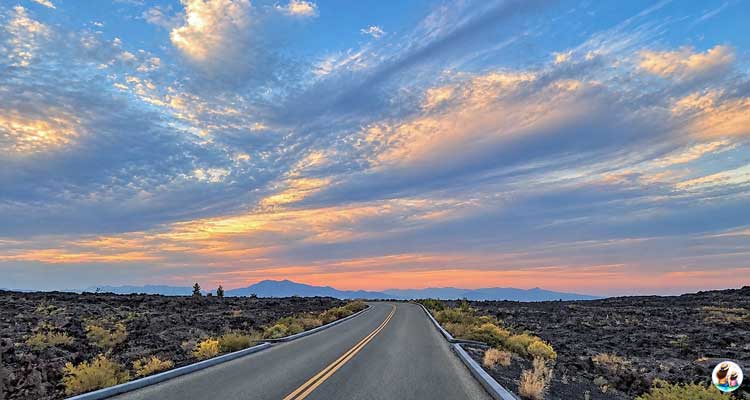
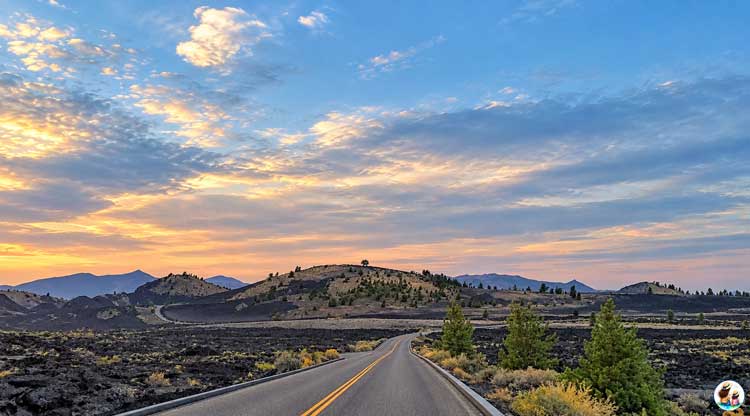
The 7-mile Loop Road is the main route through the developed area, passing volcanic formations and connecting trailheads, viewpoints and cave areas.
You can drive it in about 30 minutes without stops, but I’d allow at least two or three hours to explore along the way. We drove the loop and pulled over at several stops to look around.
With young children, the road lets you see several different landscapes with only short walks.
The Loop Road generally opens in mid-April and stays open until late November, depending on snow and weather.
2. Walk North Crater Flow Trail
Distance: 0.3-mile loop
Difficulty: Easy
North Crater Flow Trail is a short paved walk across a lava flow, with twisted volcanic rock, deep cracks and different lava textures.
It’s a good introduction to the volcanic landscape and an easy stop if you prefer shorter walks.
3. Explore Devils Orchard Nature Trail
Distance: 0.5-mile loop
Difficulty: Easy
Devils Orchard is a paved interpretive trail through scattered volcanic rocks and cinder beds. Signs along the way explain how the formations developed and how plants survive in this harsh environment.
It’s one of the more accessible walks in the monument.
4. Climb Inferno Cone
Distance: 0.4 mile round-trip
Difficulty: Moderate because of the steep slope
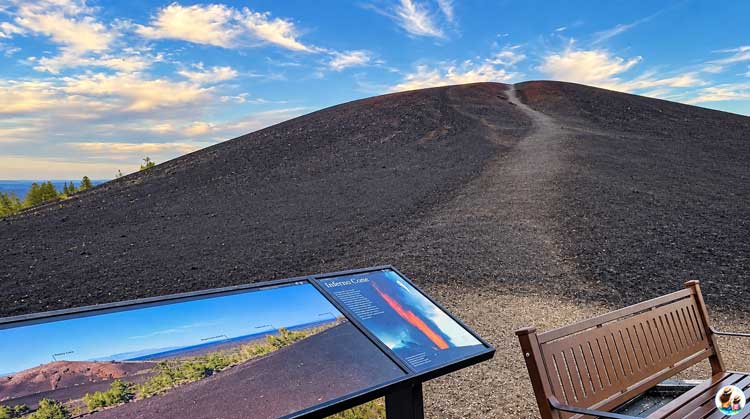
Inferno Cone is a large volcanic cinder cone. The trail climbs straight up its loose, dark slope to a viewpoint over the lava fields and mountains.
The walk is short but tiring. The summit is exposed and can be very windy, so I’d skip it in strong wind or with a storm coming.
5. Visit the Spatter Cones
Distance: 274 feet one way
Difficulty: Easy, mostly paved
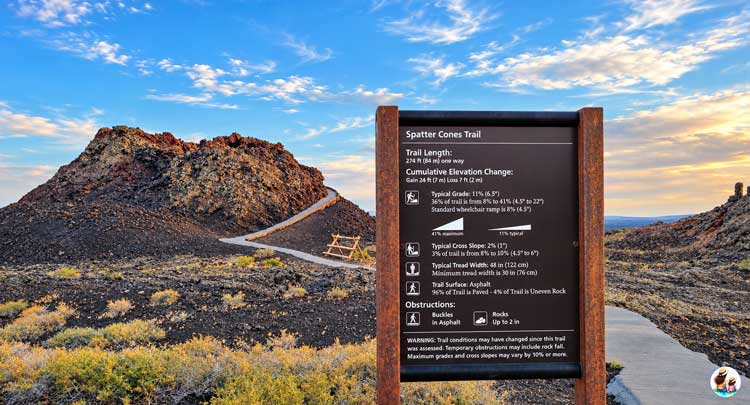
Spatter cones formed when blobs of molten lava piled up around volcanic vents. These small cones are among the most interesting features along the Loop Road.
We walked the Spatter Cones Trail, a short paved path that winds up the side of a cone. The trailhead sign lists a 24-foot climb, with a trail that’s 96% paved and a few short, steep stretches.
The accessible Snow Cone viewpoint is nearby, and it’s an easy stop to combine with others along the loop.
6. Explore the Lava Tube Caves
Craters of the Moon has lava tube caves, formed when flowing lava cooled on the outside while molten rock kept moving underneath. When the lava drained away, it left tunnels.
Indian Tunnel and Dewdrop Cave are among the caves open for public exploration when conditions allow. You’ll need a free cave permit, obtained in person at the visitor center.
Cave access depends on conditions, and visitors must follow rules designed to prevent the spread of white-nose syndrome in bats.
The caves have sharp rocks, uneven ground, low ceilings and dark sections. Bring sturdy shoes and a reliable flashlight. With a toddler, I’d check cave conditions at the visitor center before going in.
7. Hike Broken Top Loop or Tree Molds Trail
If you have more time, Craters of the Moon has longer trails beyond the short scenic stops.
Broken Top Loop is about 1.8 miles and circles a volcanic cone.
Tree Molds Trail leads to impressions left when lava flowed around trees.
For a shorter visit, I’d prioritize the Loop Road and a few of the short trails.
How Long Do You Need at Craters of the Moon?
If you’re passing through Idaho, a half-day stop works well. Allow more time if you want to hike or explore the caves.
Camping Inside Craters of the Moon
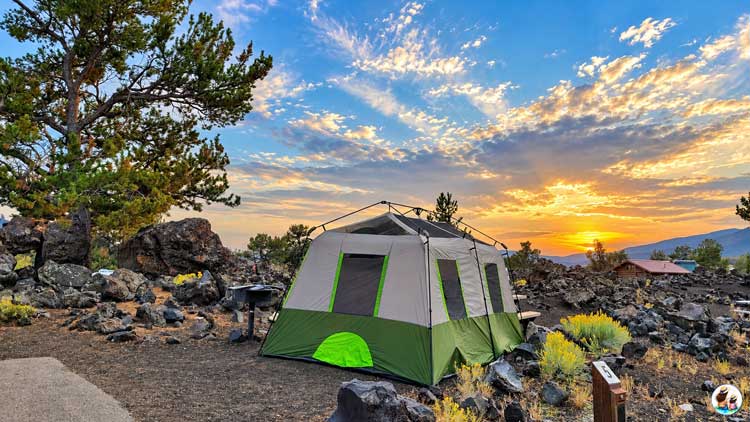
We tent-camped at Lava Flow Campground, which sits among volcanic formations near the visitor center, with dark lava fields around the campsites.
Strong winds picked up overnight, and with a storm approaching, we packed up and drove about an hour and a half to Idaho Falls. If you’re tent camping here, especially with young children, check the wind forecast and know where your backup hotel is before you set up.
The campground is exposed, and the National Park Service notes that drying winds are common, particularly in the afternoon.
Lava Flow Campground Facilities
Lava Flow Campground has 42 sites, all first come, first served, with no advance reservations.
Facilities include picnic tables, charcoal grills, vault toilets and seasonal drinking water. There are no showers, electrical hookups or wood fires.
Camping fees are paid by credit card at the campground’s automated fee machine. Check the official campground information for current fees and operating dates.
Related: Tent Camping at Craters of the Moon: Our Experience at Lava Flow Campground
Where to Stay Near Craters of the Moon
There are no hotels inside the monument, so if you’d rather not camp, you’ll stay in a nearby town or a larger city farther away.
Arco is the closest town for lodging and restaurants. Choices are limited, so check availability before you arrive.
Carey, to the southwest, has very limited services, so book ahead if you’re counting on a room there.
Idaho Falls and Twin Falls have far more hotels and restaurants, but each is about an hour and a half away, so plan that drive before dark.
My recommendation: If you want to camp, check the forecast and have a backup plan. If you’d rather stay in a hotel, book before driving through this part of Idaho.
Compare hotels in Arco, Idaho Falls and Twin Falls →
Visiting Craters of the Moon With Kids
Our daughter was two on this trip. Several attractions are reachable by car and short walks, so for toddlers I’d focus on the Loop Road, viewpoints and short paved trails like Devils Orchard and Spatter Cones.
The volcanic rock is sharp and uneven in many places, so sturdy shoes and close supervision matter. Use a child carrier on rough trails. The paved accessible paths work for strollers.
The lava tube caves take more preparation, and some sections involve scrambling over rocks.
Craters of the Moon Entrance Fees and Hours
Craters of the Moon is open year-round, although road access changes with the seasons.
The entrance fee covers everyone in the same private vehicle, and America the Beautiful passes are accepted. When the Loop Road is closed to vehicles, the National Park Service generally waives the entrance fee.
Check the official entrance fees and operating hours before traveling.
Best Time to Visit Craters of the Moon
Late spring through early fall gives you the easiest access to the Loop Road and hiking trails.
Summer days can be hot because the dark lava absorbs heat, and much of the landscape has little shade. Spring and fall are cooler, but strong wind is still common, even in mid-September, when we visited.
Winter brings snow, and the Loop Road usually closes to vehicles.
If you’re planning to tent-camp, check the forecast for wind, rain, thunderstorms and overnight temperatures.
Practical Tips for Visiting Craters of the Moon
Fill Up Your Gas Tank Before Arriving
Refuel before driving toward Craters of the Moon, especially if you’re continuing through rural Idaho afterward.
Bring Food and Drinking Water
There are no restaurants inside the monument. Bring snacks, meals and plenty of drinking water, especially if you’re traveling with children.
Download Offline Maps
Cell service can be unreliable in and around the monument.
Check Your Next Hotel Before Leaving
If you’re continuing to Idaho Falls, Twin Falls or another destination, check your driving time and hotel before leaving the monument.
Watch the Weather
The landscape is exposed, and wind can make hiking and camping uncomfortable or unsafe. Watch the forecast closely, especially if you’re camping with young children.
Start at the Visitor Center
The visitor center is the place to get trail information, learn about the volcanic formations and pick up a cave permit. Check its hours if you plan to explore the caves.
Is Craters of the Moon Worth Visiting?
Yes. Craters of the Moon has volcanic landscapes you won’t see anywhere else on an Idaho road trip, and the Loop Road and short trails let you see the main sights in a few hours. It’s also an easy place to break up a drive between Montana, Utah, Wyoming’s national parks and the rest of Idaho.
I’d recommend visiting, including with young kids. Just plan your route, overnight stay and the weather ahead of time.
Planning to camp? Read Tent Camping at Craters of the Moon: Our Experience at Lava Flow Campground for tips on staying at Lava Flow Campground.
More Scenic Places to Explore
Planning more national park visits and road trips? These guides cover other places we’ve explored.
- Death Valley National Park Itinerary — Salt flats, sand dunes, scenic overlooks and desert drives.
- Big Bend National Park Itinerary — Mountain trails, desert scenery and planning for long distances between stops.
Get the Free Ambitious Family Travel Pre-Trip Planner
Not sure if a big trip is realistic with a young child?
Use the same tools we use before we book: the “Should We Take the Kid?” scorecard, destination readiness check, 1+1 itinerary formula, and backup planning worksheets.
No spam—just the planner and occasional practical family travel tips. Unsubscribe anytime.