Is the Great Wall Really Held Together With Rice?
The Great Wall of China sticky rice story sounds unbelievable, but scientists have found evidence that ancient builders really used it in mortar.
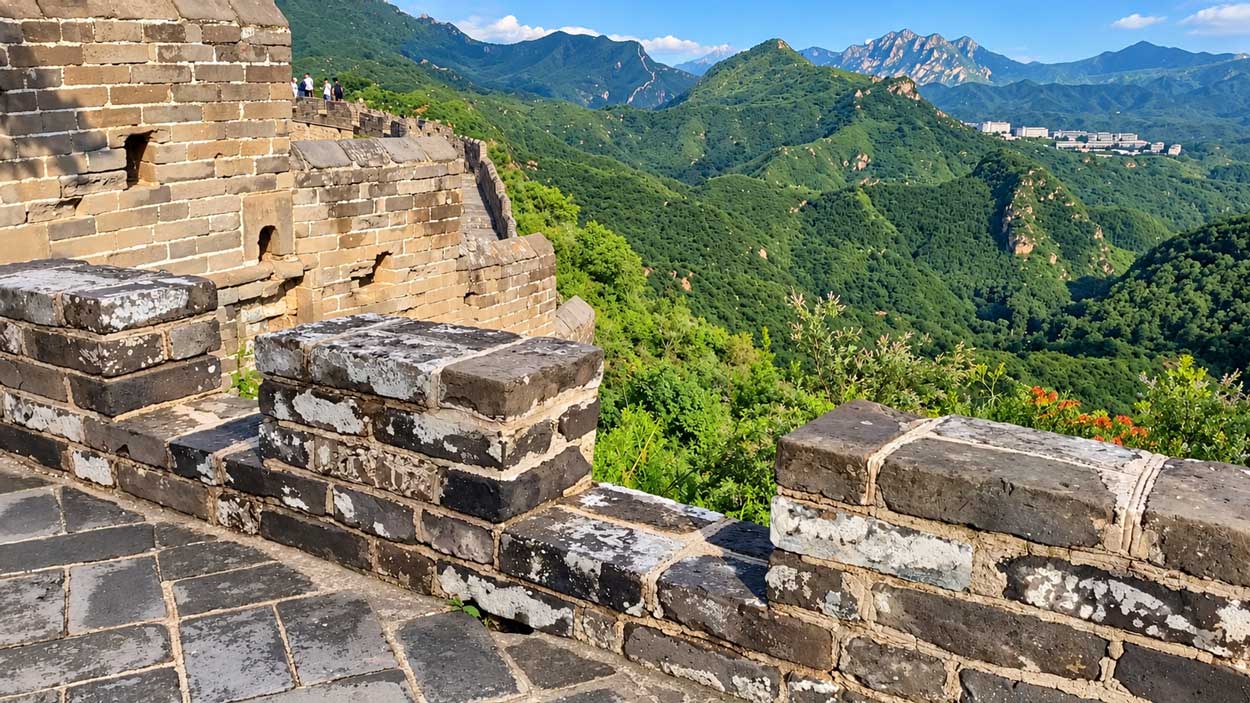
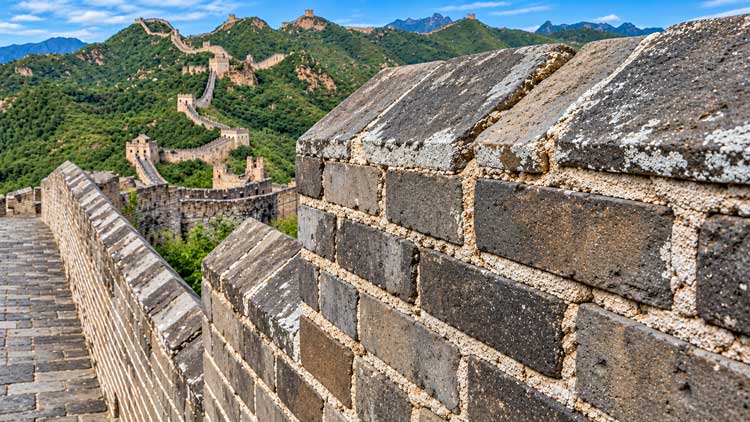
We were hiking Jinshanling on a hot July afternoon when I started noticing the mortar between the old bricks.
The Great Wall climbed steeply along the mountains, with uneven steps that sometimes had me reaching for my 6-year-old’s hand. She ran ahead on the flatter stretches while I watched our footing.
Looking at the old masonry made me curious about how builders had managed to construct something so enormous centuries ago.
One surprising answer? Sticky rice. Here’s what the science says about Great Wall of China sticky rice mortar, and what we noticed on our own hike.
Was Sticky Rice Used to Build the Great Wall?
Yes. Ancient Chinese builders mixed sticky rice soup with lime to make a strong, durable mortar. A nationwide survey of historic Chinese mortar found it in sections of the Great Wall as well as city walls, tombs and temples. The technique was widely used during the Ming dynasty, when many of the brick sections of the Great Wall near Beijing were constructed.
What Is Sticky Rice Mortar?
Sticky rice mortar is a traditional Chinese building material made by mixing cooked glutinous rice soup with slaked lime.
Lime was already used as mortar in ancient construction. Adding sticky rice improved its strength and durability.
The technique dates back roughly 1,500 years and became widely used during the Ming dynasty (1368–1644).
Builders used it in city walls, tombs, temples, bridges and other masonry structures.
Having grown up eating sticky rice in the Philippines, I knew how soft and chewy it could be. I certainly hadn’t imagined it as a building material.
Yet the starch that makes sticky rice so sticky also helps explain why it worked in mortar.
How Did Sticky Rice Make the Mortar Stronger?
In 2010, researchers Fuwei Yang, Bingjian Zhang and Qinglin Ma published a study in the scientific journal Accounts of Chemical Research examining traditional sticky rice–lime mortar.
They identified two important components:
- Calcium carbonate, the mineral component produced as lime mortar hardens.
- Amylopectin, a starch associated with sticky rice.
Amylopectin influences how calcium carbonate crystals form as the mortar hardens.
The researchers found that adding sticky rice helped produce a more compact structure, improving the mortar’s strength and resistance to water. The reactions inside the mortar may even continue over time, making it stronger with age.
That helps explain how some historic Chinese masonry has survived centuries of exposure to the elements.
You can read the original scientific study here.
Was Sticky Rice Actually Found in Great Wall Mortar?
Yes, with some nuance.
Researchers Jiajia Li and Bingjian Zhang spent six years collecting 378 ancient mortar samples from 159 sites across China. Their survey found sticky rice mortar was widespread by the Ming dynasty, including in sections of the Great Wall.
One Great Wall sample, from Yanqing County near Beijing, contained something even more surprising: animal blood.
Other studies have confirmed sticky rice mortar in Ming city walls, including Nanjing’s 600-year-old wall and four of seven ancient city walls tested in Zhejiang Province.
But not every section used the same recipe. An analysis of the Dazhuangke section of the Ming Great Wall in Beijing found its mortar was dolomitic lime.
The Great Wall was built and rebuilt over many centuries. Different sections used different materials, including rammed earth, stone, brick and lime mortar.
We experienced some of those differences during our own Great Wall trip.
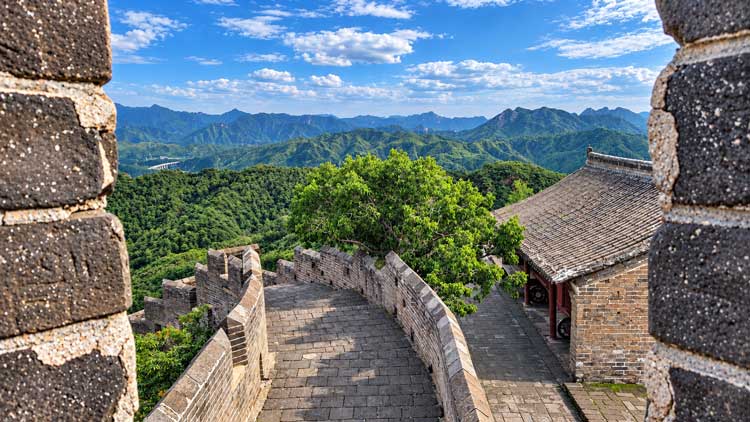
At Jinshanling, we climbed steep sections of partly restored masonry. At Gubeikou, we slept inside an unrestored watchtower. At Mutianyu, we explored a much more heavily restored section.
Each felt different underfoot.
We couldn’t identify the ingredients in the mortar simply by looking at the bricks. But the research shows sticky rice mortar was part of Ming-era Great Wall construction, alongside other recipes.
Why Does Sticky Rice Mortar Still Matter?
Researchers continue studying sticky rice mortar because historic buildings need repair materials compatible with their original construction.
Modern cement can behave differently from traditional lime mortar. Using an unsuitable material during restoration can damage old masonry.
The 2010 research found that sticky rice–lime mixtures had promising properties for repairing historic structures.
It has already been used in real restoration work, including repairs to the roughly 800-year-old Shouchang Bridge in eastern China.
It’s remarkable that a building technique developed centuries ago is still being studied for modern conservation work.
What to Notice When Visiting the Great Wall
If you’re visiting a brick-built section of the Great Wall, take a closer look at the masonry.
You’ll see mortar filling the spaces between bricks, particularly around watchtowers and restored sections.
Older masonry can look weathered and uneven, while repaired areas may have a different finish.
You can’t determine whether a particular joint contains sticky rice just by its appearance. That requires scientific analysis.
During our visit, we were much more focused on climbing the steep steps, enjoying the mountain views and keeping up with our daughter. Learning about the building materials afterward gave me another reason to appreciate what we’d walked on.
So, Is the Great Wall Held Together With Rice?
Yes, sticky rice was used as an ingredient in some of the lime mortar used to construct the Great Wall.
The rice supplied starch that improved the mortar’s properties. The lime remained the main binding material.
Scientific studies have confirmed sticky rice additives in historic Chinese masonry, including sections of the Great Wall.
After hiking Jinshanling, sleeping inside a Gubeikou watchtower and exploring Mutianyu, I find that detail fascinating. A familiar food played a part in building one of the world’s most extraordinary landmarks.
Plan Your Great Wall Trip
We explored three Great Wall sections over two days, including an overnight stay inside a watchtower.
If you’re planning your own visit, these firsthand guides cover the route, difficulty and experience:
- Our 2-Day Great Wall Itinerary: Jinshanling, Gubeikou and Mutianyu
- Is the Great Wall of China Hard to Climb?
- Sleeping on the Great Wall of China
- 5-Day Beijing Itinerary With Kids
Planning a trip to China?
Get our free China Travel Cheat Sheet with practical information on payments, internet access, transportation and the things we learned during our trip.
Big trips. Little traveler.
Packing for China With Kids? Grab the Checklist.
One page. Everything we actually used.
Bags, kid comfort, health, documents and money, plus the power bank check to do before every domestic flight in China.
Enter your email and I’ll send it straight to your inbox.
No spam—just the checklist and occasional practical family travel tips. Unsubscribe anytime.